Saffron is more expensive per ounce than gold, and yet nobody locks it in a safe. It sits in a cabinet next to the paprika, slowly losing potency while you forget it’s there. That disconnect between value and treatment runs through almost everything we eat. We handle ingredients every day without knowing where they came from, what they actually are, or why we started eating them in the first place. This food trivia set is built around those blind spots.
I’ve run these questions at pub nights, dinner parties, and corporate events where the CEO thought he was a foodie. The pattern is always the same: people are most confident right before they’re most wrong. If you cook, you’ll get some of these. If you eat out a lot, you’ll get different ones. Almost nobody gets all of them.
The Ones That Sound Easy
1. What fruit is a banana classified as, botanically speaking?
Everyone in the room will shout “fruit” and look at you like you’re wasting their time. Then you tell them the specific classification and the energy shifts.
Show Answer
A berry. Botanically, bananas are berries. Strawberries, raspberries, and blackberries are not. This answer has started more arguments than any other question I’ve ever asked. Common wrong answer: “herb” , which is actually true of the banana plant itself, and someone always half-remembers that, which makes everything worse.
2. What country produces the most coffee in the world?
This one separates the people who drink coffee from the people who’ve actually looked at the bag.
Show Answer
Brazil, by a wide margin. They produce roughly a third of the world’s coffee. Common wrong answer: Colombia or Ethiopia. Colombia has better branding. Ethiopia has the origin story. Brazil has the farms.
3. What’s the most consumed manufactured drink in the world?
I always pause after this one. Let people commit. The confident ones go fast and wrong.
Show Answer
Tea. Not coffee, not Coca-Cola, not beer. Tea. It’s consumed in virtually every culture on earth, and the volume isn’t close.
4. What does “Dorito” roughly translate to in Spanish?
Nobody expects a snack food etymology question. That’s exactly why it works.
Show Answer
“Little golden thing.” From “doradito,” diminutive of “dorado” (golden). It was invented at Disneyland’s Casa de Fritos restaurant in the early 1960s, which is a separate piece of trivia I sometimes throw in just to watch people’s faces.
The Ones That Feel Like Traps (Because They Are)
5. What color is a ripe coffee cherry?
If you’ve never been to a coffee farm, your brain is going to do something interesting here. It’ll try to reverse-engineer the answer from the color of roasted beans.
Show Answer
Red. Sometimes yellow, depending on the variety, but red is the standard answer. The brown we associate with coffee is entirely a product of roasting. The fruit itself looks like a cranberry.
6. Wasabi served at most sushi restaurants outside Japan is actually made from what?
This is one of those food trivia questions where knowing the answer makes you feel a little cheated.
Show Answer
Horseradish, mustard, and green food coloring. Real wasabi loses its flavor within about 15 minutes of being grated, and the plant itself is notoriously difficult to grow. Most people have never tasted real wasabi in their lives.
7. What nut is used to make marzipan?
Simple. Clean. The kind of question that punishes people who overthink.
Show Answer
Almonds. Ground almonds and sugar. People sometimes guess pistachios or cashews, usually because they’re picturing a different confection.
8. Scoville Heat Units measure the spiciness of peppers. What pepper currently holds the Guinness World Record for hottest?
This one rotates every few years, which is what makes it dangerous. People lock in whatever they last heard and treat it as gospel.
Show Answer
Pepper X, measured at 2.69 million SHU, certified in 2023. Created by Ed Currie, the same person behind the Carolina Reaper. Common wrong answer: the Carolina Reaper, which held the record from 2013 to 2023 and is still what most people cite.
9. What common kitchen spice comes from the Crocus sativus flower?
I opened with a fact about this one, so let’s see if you were paying attention.
Show Answer
Saffron. Each flower produces only three stigmas, and they’re harvested by hand. It takes roughly 75,000 flowers to produce a single pound of saffron, which explains the price.
The Ones That Start Debates
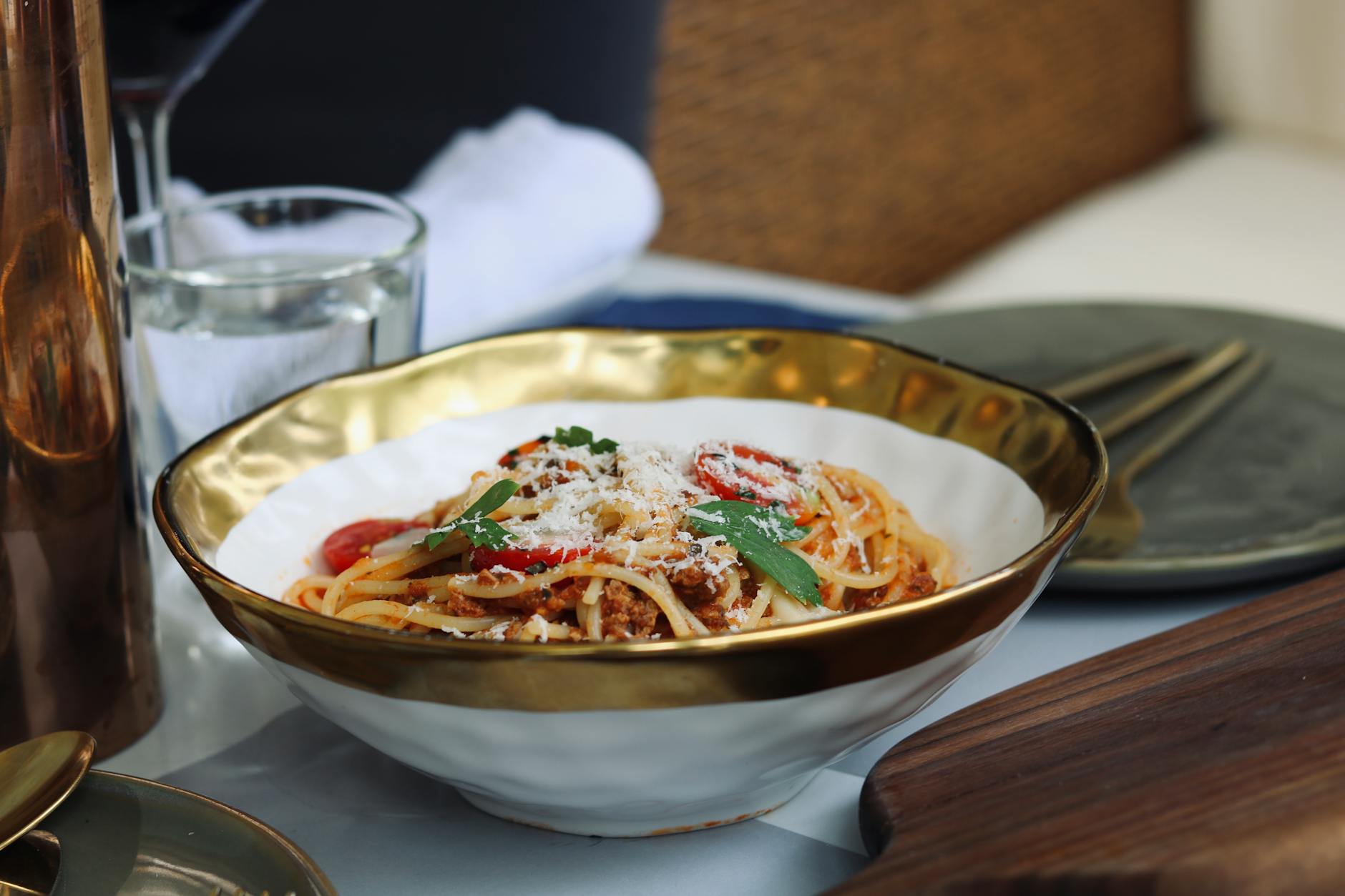
10. In the original Italian recipe, what meat is used in a traditional Bolognese sauce?
I’ve watched tables split down the middle on this one. People who cook Italian food at home are the most likely to get it wrong, because they’ve been making their own version for years and have convinced themselves it’s authentic.
Show Answer
A mix of beef and pork, with some versions including veal or pancetta. The official recipe registered by the Accademia Italiana della Cucina in 1982 calls for a combination. What it does not call for is garlic, which is a detail that genuinely upsets people.
11. Is a tomato a fruit or a vegetable?
Before you roll your eyes: I know you know it’s botanically a fruit. But in 1893, the U.S. Supreme Court ruled on this exact question. What did they decide?
Show Answer
Vegetable. In Nix v. Hedden, the Supreme Court unanimously ruled that tomatoes are vegetables for the purposes of trade and tariffs, based on common culinary usage rather than botanical classification. The court acknowledged the botanical reality and then politely ignored it.
12. What country invented French fries?
The name is the trap. And it works every single time.
Show Answer
Belgium. Or at least, that’s the most widely supported historical claim. The story goes that villagers in the Meuse Valley fried small cuts of potatoes when the river froze and they couldn’t fish. American soldiers stationed in Belgium during World War I encountered them, and because the local language was French, they called them “French” fries. Common wrong answer: France, obviously.
13. What’s the only food that doesn’t spoil?
People love this question because they think they know it, and they’re usually right, which gives them a hit of dopamine right when they need one.
Show Answer
Honey. Archaeologists have found pots of honey in Egyptian tombs that are over 3,000 years old and still perfectly edible. Its low moisture content and acidic pH create an environment where bacteria simply can’t survive.
Where It Gets Harder
14. What Japanese word describes the “fifth taste” beyond sweet, sour, salty, and bitter?
This used to be a hard question. Then every food show on Netflix started saying it, and now it’s a test of whether you’ve been paying attention to pop culture or just eating.
Show Answer
Umami. Identified by Japanese chemist Kikunae Ikeda in 1908, it wasn’t widely accepted in Western science until the early 2000s. The taste is associated with glutamate, which is why MSG works the way it does.
15. What fruit contains an enzyme that prevents gelatin from setting?
If you’ve ever ruined a Jell-O mold, you already know this one in your bones.
Show Answer
Pineapple. The enzyme is bromelain, and it breaks down the protein structure in gelatin. Cooking the pineapple first deactivates it. Common wrong answer: kiwi, which actually does the same thing (actinidin), but pineapple is the textbook answer.
16. What grain is used to make traditional Japanese sake?
Most people get this. The follow-up that gets them: is sake a wine, a beer, or a spirit?
Show Answer
Rice. And for the follow-up: sake is technically brewed more like a beer, through a fermentation process, even though it’s often called rice wine. It’s neither distilled like a spirit nor fermented from fruit like wine.
17. What country is the world’s largest producer of olive oil?
Italian restaurants have given Italy incredible branding on this one. The branding is a lie.
Show Answer
Spain. By a significant amount. Spain produces nearly half the world’s olive oil. Italy is a major producer, but it also imports a lot of Spanish olive oil, repackages it, and exports it as Italian. Common wrong answer: Italy or Greece.
18. What popular candy bar is named after the Mars family’s horse?
This is a palate cleanser. Light, surprising, and it gives people who’ve been struggling a chance to guess right on instinct.
Show Answer
Snickers. Named after the Mars family’s favorite horse, who died shortly before the candy bar launched in 1930. The name stuck.
The Deep End
19. What is the primary ingredient in Worcestershire sauce that gives it its distinctive funky flavor?
People who use this sauce every week have never once looked at the ingredient list. I find this beautiful.
Show Answer
Anchovies. Fermented anchovies, specifically. The sauce is essentially a descendant of ancient Roman fish sauces. When I tell people this at events, someone at the table always quietly puts down their steak.
20. What vegetable was used as a unit of currency in ancient Rome for paying soldiers, giving us the word “salary”?
Technically this is a history question wearing a food costume. It plays well either way.
Show Answer
None, technically. The word “salary” comes from “salarium,” related to salt, not a vegetable. But I phrased the question to say vegetable, and most people don’t catch the misdirection. They start guessing onions and garlic. The real answer is salt, which isn’t a vegetable at all. If you caught that, respect.
21. What percentage of the world’s almonds are produced in California?
Give a range. Closest guess wins. This format works brilliantly at live events because it gives everyone a shot.
Show Answer
Approximately 80%. California’s Central Valley is essentially the almond capital of the world. It’s a staggering concentration that most people underestimate by half.
22. Before it became a dessert staple, what was vanilla primarily used for by the Aztecs?
The answer reframes vanilla completely. It stops being boring after you know this.
Show Answer
To flavor chocolate drinks, specifically cacao beverages consumed by royalty and warriors. Vanilla was never a standalone flavor for the Aztecs. It was always paired with cacao. The idea of vanilla as plain or default is an entirely modern Western invention, and a deeply ironic one given its origins.
23. What common food product was originally sold as a medicine in the 1830s?
There are several correct answers to this, but I’m looking for a specific one.
Show Answer
Ketchup. In the 1830s, an Ohio physician named John Cook Bennett began selling tomato extract in pill form as a cure for diarrhea, indigestion, and jaundice. The tomato-based condiment we know evolved from that era. Common wrong answer: Coca-Cola, which was also sold as a medicine, but that came later in 1886.
24. What is the most stolen food in the world?
This question always gets a laugh when people guess, because the guesses reveal a lot about a person’s priorities.
Show Answer
Cheese. About 4% of all cheese produced globally is stolen, according to a study cited by the Centre for Retail Research. It’s compact, expensive, and universally desired. The black market for high-end cheese is real and thriving, which is a sentence I never expected to say at a trivia night.
The Last One
25. What food was so feared when it was first brought to Europe that it was called “the devil’s apple” and people believed eating it could cause leprosy, syphilis, and early death?
I save this one for last because the answer lands differently depending on how many of the previous questions you got right. If you’ve been paying attention to the recurring theme of this whole set, you already know: the things we eat every day without thinking are almost never what we assume they are. They have stranger histories, wilder journeys, and more complicated identities than we give them credit for. This one is the perfect example.
Show Answer
The potato. For nearly 200 years after arriving in Europe from South America, potatoes were widely feared and rejected. The French banned their cultivation for a time. It took a sustained propaganda campaign by Antoine-Augustin Parmentier, who convinced Louis XVI to post armed guards around potato fields just to make them seem valuable enough to steal, before the French public would eat them. The most ordinary food in the Western world was once considered genuinely dangerous. That’s how I like to end a food trivia night. With the reminder that everything familiar was once completely strange.
In 14 years of writing food and drink trivia from Los Angeles, CA, I've found that the best questions come from the weird history behind ordinary things. Who first made that dish? Where did that drink actually come from? That's where the good questions live. My rounds have been used by Quiz Night King, and I take the same care with every set I write.
Latest posts by James Williams
(see all)