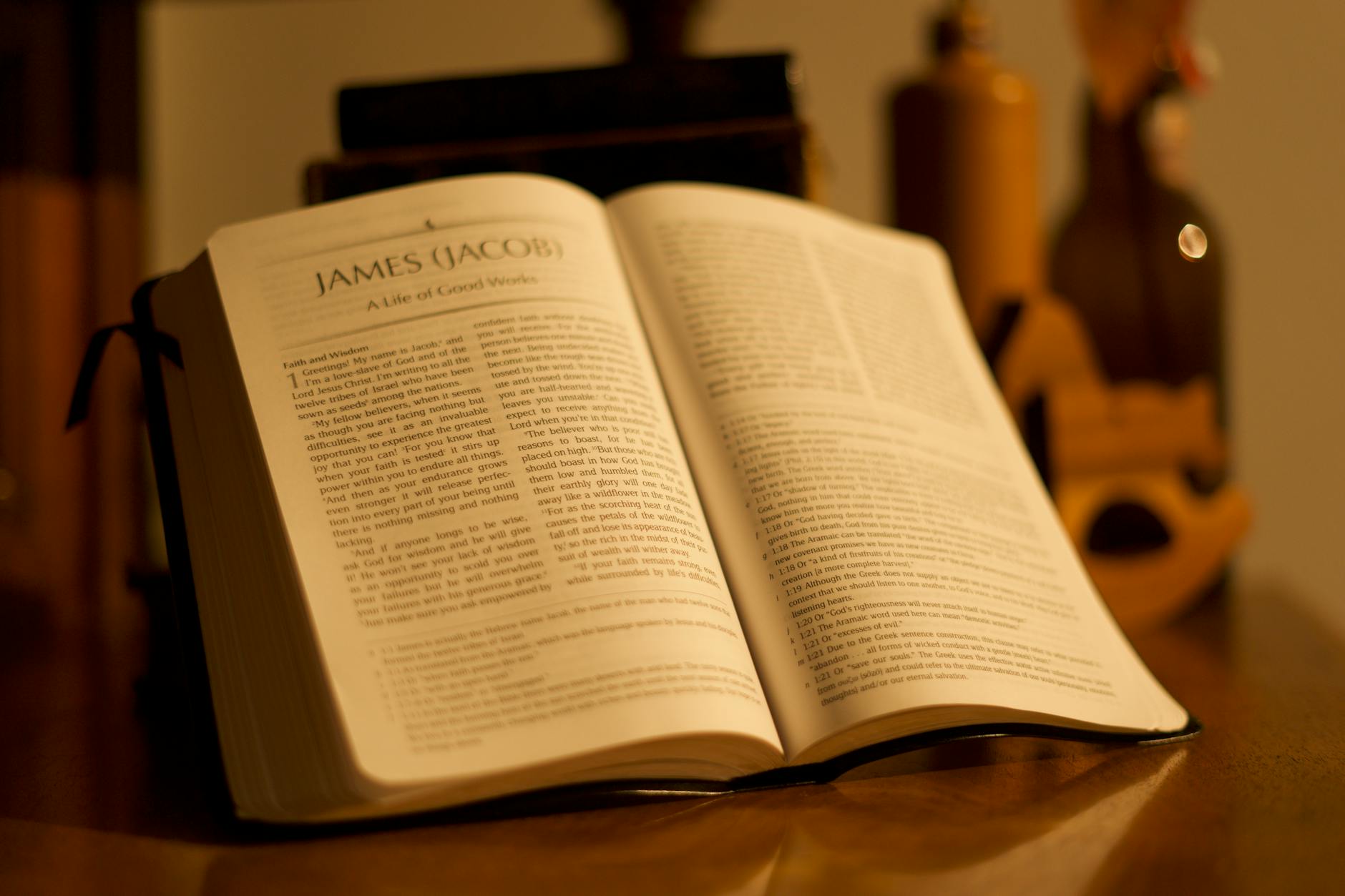
50 Hard Bible Trivia Questions and Answers That Will Humble Your Church Small Group
These aren't the questions you learned in vacation Bible school. They're the ones that make people who've read the whole Bible twice suddenly go very quiet.

The question that gets the most wrong answers at my trivia nights isn’t the one about obscure Soviet history or the chemical formula for something nobody’s heard of. It’s the one where I ask how many sides a stop sign has. People know this. They’ve seen a stop sign every single day of their driving lives. And yet, when I ask it out loud in a room, I watch confident adults mouth “six” to their teammates like they’re delivering classified intelligence.
That’s the thing about easy trivia questions. They don’t test knowledge so much as they test the relationship between what you know and what you can access under the tiniest bit of pressure. The answer’s already in your head. The question is whether you’ll trust it when someone’s watching.
These 30 questions are built for that sweet spot. They’re approachable enough for any crowd, but I’ve seen every single one of them cause at least one person to change their answer at the last second. Usually to the wrong one.
1. What color are the stars on the American flag?
I start with this one at family-friendly events because it warms the room up fast. Everyone shouts it out, everyone feels good, and nobody realizes I’m about to spend the next hour slowly eroding their confidence.
2. How many continents are there?
This one sounds bulletproof until you remember that different countries actually teach different numbers. In parts of Europe and Latin America, the Americas are one continent. But for most English-speaking trivia contexts, there’s a standard answer.
3. What planet is closest to the Sun?
A room full of adults will get this one right. A room full of adults who’ve had two drinks will start debating whether it’s Venus.
4. What is the largest ocean on Earth?
It covers more area than all the land on the planet combined. That fact alone should make it unforgettable, and it usually is.
5. In what sport would you perform a slam dunk?
I use this one as a palate cleanser. No tricks, no traps. Just a freebie that keeps people in the game.
6. How many days are in a year?
The pause before people answer this one is my favorite thing. You can see them thinking: “Is this a leap year question? Is it 365 or 365.25? What’s the trick?” Sometimes the easiest questions are the hardest because people can’t believe there isn’t a catch.
7. What is the hardest natural substance on Earth?
People know this one. But there’s always someone who says “titanium” with the absolute certainty of a person who’s never been wrong about anything in their life.
8. How many sides does a stop sign have?
Here it is. The question I mentioned at the top. I’ve run this at dozens of events. The success rate is genuinely lower than you’d expect for something bolted to every street corner in America.
9. What is the smallest country in the world by area?
This gets shouted out quickly at most tables, which is satisfying. It’s one of those facts that stuck from childhood and still feels fun to know.
10. What do caterpillars turn into?
I’ll put a question like this in the middle of an adult trivia night just to watch people look around and make sure it’s not a trick. It never is. But the suspicion is half the fun.
11. What language is spoken in Brazil?
This is the one that sorts a room. About a third of any group will say Spanish without hesitating. They’re not dumb. They just made an assumption about South America and never had a reason to revisit it.
12. How many zeros are in one million?
Quick mental math under social pressure. People start counting on their fingers, which is exactly what I want to see.
13. What is the tallest mountain in the world?
A classic for a reason. But I always wait to see if someone tries to argue for Mauna Kea measured from its base on the ocean floor. There’s one at every event.
14. What primary color isn’t in the French flag?
This requires two pieces of knowledge: the colors in the French flag and the list of primary colors. Most people have both. Combining them under a time limit is where it gets interesting.
15. What is the boiling point of water in Fahrenheit?
Celsius people know it’s 100. Fahrenheit people know it’s 212. The fun is watching someone who uses one system try to recall the other.
16. What animal is known as the King of the Jungle?
The irony of this one is that lions don’t live in jungles. They live in savannas and grasslands. But the nickname stuck centuries ago and nobody’s bothered to update it.
17. What is the longest river in the world?
This one genuinely starts arguments because geographers have been debating it for decades. Depending on how you measure, the Amazon might actually be longer. But the textbook answer hasn’t changed yet.
18. How many letters are in the English alphabet?
I once watched a woman count on her fingers under the table during this question. She got it right. I respected the process.
19. What is the chemical symbol for water?
If someone gets this wrong, they’re having a very long night.
20. What fruit is traditionally associated with keeping doctors away?
The proverb dates back to 1860s Wales, and the original version was “Eat an apple on going to bed, and you’ll keep the doctor from earning his bread.” Somehow that got workshopped into something catchier.
21. What gas do plants absorb from the atmosphere during photosynthesis?
People say oxygen so fast sometimes that they answer before the question is finished. Then they hear the word “absorb” and their face changes.
22. What is the currency of Japan?
Quick, clean, and it separates people who travel from people who don’t. Though honestly, anyone who’s eaten at a Japanese restaurant with prices on the wall in yen has a shot.
23. How many Harry Potter books are there?
The confidence on this one is always high. The accuracy is also high. It’s a crowd-pleaser that rewards the readers in the room.
24. What color do you get when you mix red and white?
A kindergarten question that adults answer correctly with a strange amount of pride. I include it because the relief on people’s faces is genuine.
25. What is the largest mammal in the world?
People know this. But I’ve learned to specify “mammal” clearly, because if you just say “largest animal,” someone will start talking about jellyfish tentacle length.
26. What does “www” stand for in a website address?
We type it constantly and say it never. Most people can pull this one out, but there’s always a hesitation that tells you they’re reconstructing it letter by letter.
27. How many bones does an adult human body have?
This is one where the number just has to be memorized. You either know it or you’re guessing. I’ve heard answers ranging from 106 to 350. The guesses tell you a lot about how people think about their own bodies.
28. In what country would you find the Great Barrier Reef?
I’ve never had someone get this wrong and not immediately argue that they knew it. Which means they knew it.
29. What is the name of the fairy in Peter Pan?
A question that hits different depending on your generation. Older crowds picture the Disney animation. Younger ones picture Julia Roberts. Everyone arrives at the same answer.
30. How many months have 31 days?
This is the one I close with because it does something beautiful to a room. Everyone starts counting on their knuckles. Every single time. Grown adults in suits, teenagers, retirees who’ve lived through almost a thousand months. They all go to the knuckles. And they all take longer than they expected. Some of them move their lips. A few give up and guess. It’s a question about something you’ve known your entire life, and it still makes you work for it. That’s what easy trivia questions really are. Not a test of what you know. A test of whether you can reach it when someone’s counting down from ten.

These aren't the questions you learned in vacation Bible school. They're the ones that make people who've read the whole Bible twice suddenly go very quiet.
These adult trivia questions were built for the moment someone says 'No way, that can't be right' and reaches for their phone. Forty of them, paced like a real game night.
These 60 questions were built for the specific brain of someone who's been in school long enough to be confident about the wrong things. Your study group won't survive this.
I've watched grown adults nearly flip a table over whether Rudolph is technically one of Santa's reindeer. These 50 christmas trivia questions are built to do exactly that kind of damage.