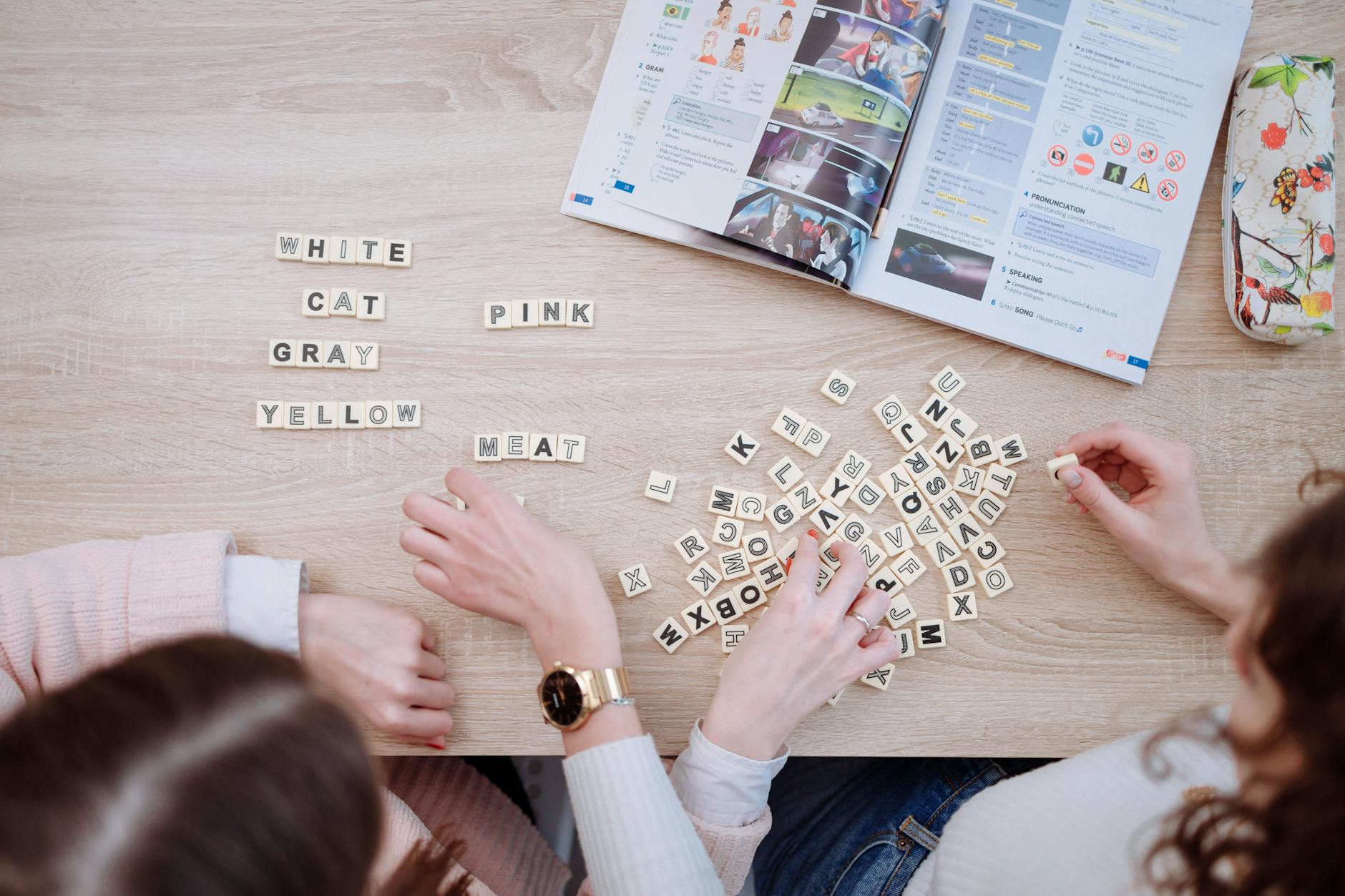
The question that gets the biggest reaction in any trivia room I’ve ever hosted isn’t the hardest one. It’s the one where every single person at the table is absolutely certain they’re right, and half of them are wrong. That gap between confidence and reality is where the fun lives. It’s why people come back next week.
I’ve been writing and running fun trivia questions for years now, and the ones below are selected for a very specific quality: they do something to you before you see the answer. Some will make you feel smart. Some will make you feel betrayed. A few will make you turn to whoever’s next to you and say “Wait, seriously?” That’s the whole point.
The Ones That Feel Like Layups
1. How many hearts does an octopus have?
This is a perfect opener because half the room knows it, and the other half has never once considered the question. The people who get it right feel like geniuses. The people who get it wrong immediately want to know more. That’s the sign of a good first question.
Show Answer
Three. Two pump blood to the gills, one pumps it to the rest of the body. Most wrong answers land on two or eight, because people either think “pair” or figure it matches the legs.
2. What country has the most time zones?
Russia is the gut answer, and the gut is usually right. But I’ve watched tables full of smart people talk themselves out of it by overthinking France’s overseas territories. Which, to be fair, is a reasonable rabbit hole.
Show Answer
France, with 12 time zones (including overseas territories like French Polynesia, Réunion, and Martinique). Russia has 11. The common wrong answer is Russia, because people picture the map and forget that France has pieces of itself scattered across the planet.
3. What’s the only letter that doesn’t appear in any U.S. state name?
I love this one because you can watch people’s eyes go up and to the left, mentally running through the alphabet. It takes about four seconds before the first confident wrong answer comes out.
Show Answer
Q. Most people guess X or Z first, forgetting about New Mexico and Arizona.
4. How many bones does a shark have?
Short question, clean answer, and it teaches people something they’ll repeat at dinner for the next month.
Show Answer
Zero. Sharks have skeletons made entirely of cartilage.
The Confidence Trap
5. What was the first toy advertised on television?
Everyone reaches for Barbie or Slinky. Both feel right. Neither is.
Show Answer
Mr. Potato Head, in 1952. It was also the first toy ad aimed directly at children rather than their parents. Barbie didn’t hit TV screens until 1959.
6. What percentage of the Earth’s water is fresh water: 3%, 10%, or 25%?
I give the multiple choice because the real number shocks people into silence. Without options, most guess somewhere around 20 to 30 percent, which tells you something about how badly we misjudge scarcity.
Show Answer
About 3%. And most of that is locked in glaciers and ice caps. Less than 1% of all Earth’s water is accessible fresh water.
7. In Monopoly, what’s the most landed-on space that isn’t Go?
Board game people light up at this one. Everyone has a theory. The answer is boring and perfect.
Show Answer
Jail. Between “Go to Jail,” the Chance and Community Chest cards that send you there, and rolling doubles three times, Jail sees more traffic than any other square. Most people guess Boardwalk or Free Parking.
8. What’s the most common surname on Earth?
This is one of those fun trivia questions where the answer is obvious once you hear it, but almost nobody says it first.
Show Answer
Wang. Over 76 million people share it. Smith doesn’t even crack the global top 50. People default to Smith because they’re thinking about their own country, not the planet.
9. Which planet spins on its side, with its axis tilted at nearly 98 degrees?
The solar system questions always play well because people remember just enough from school to be dangerous.
Show Answer
Uranus. Scientists believe a collision with an Earth-sized object billions of years ago knocked it sideways.
The Ones That Start Fights
10. What color is a mirror?
I once watched two friends nearly leave a bar over this question. One said silver, one said “it has no color, it just reflects.” Both were wrong, and the real answer made them angrier.
Show Answer
Green. A perfect mirror would reflect all colors equally, but real mirrors reflect slightly more green light. If you look down an infinite tunnel of two mirrors facing each other, you’ll see a faint green tint emerge.
11. Is a tomato a fruit or a vegetable?
Everyone thinks they know this one. The trick is that both answers are correct depending on who you ask, and that’s what makes it a perfect argument starter.
Show Answer
Botanically, it’s a fruit (it develops from the flower of a plant and contains seeds). Legally, in the United States, it’s a vegetable, thanks to the 1893 Supreme Court case Nix v. Hedden, which classified it as a vegetable for tariff purposes. The real answer is: it depends on whether you’re talking to a scientist or a tax collector.
12. How long is a moment? Not philosophically. Historically.
This question always gets a laugh because people think you’re being poetic. You’re not.
Show Answer
90 seconds. In medieval timekeeping, a moment was a defined unit equal to 1/40th of a solar hour. So when someone says “just a moment,” they technically owe you a minute and a half.
13. What’s the loudest animal on Earth?
Blue whale is the answer everyone reaches for. And I get it. They’re enormous. But volume isn’t about size the way we think it is.
Show Answer
The sperm whale. Its clicks can reach 230 decibels, louder than a jet engine. Blue whales top out around 188 decibels. The sperm whale’s click is so powerful it can theoretically vibrate a human body to death at close range, though that’s never been tested for obvious reasons.
The Ones You’ll Text Someone About
14. What was the first message ever sent over the internet?
People guess “Hello” or “Hello World” because it feels like a beginning should be ceremonial. It wasn’t.
Show Answer
“Lo.” The intended message was “Login,” sent from UCLA to Stanford in 1969, but the system crashed after the first two letters. The most important communication network in human history started with an accidental fragment.
15. How many dimples are on a regulation golf ball?
Nobody outside of golf manufacturing knows this precisely, which is what makes it fun. But people always guess, and they always guess too low.
Show Answer
Most regulation golf balls have between 300 and 500 dimples, with 336 being the most common number. There’s no official rule mandating a specific count.
16. What’s the only food that literally never spoils?
I’ve had people argue for Twinkies, dried rice, and MREs. The real answer is older than all of civilization.
Show Answer
Honey. Archaeologists have found 3,000-year-old honey in Egyptian tombs that was still perfectly edible. Its low moisture content and acidic pH create an environment where bacteria simply can’t survive.
17. What do you call a group of flamingos?
Collective nouns for animals are trivia gold because the English language apparently went through a very creative phase in the 15th century and never looked back.
Show Answer
A flamboyance. Which might be the most perfectly named collective noun in the entire language.
18. How many years did the Hundred Years’ War actually last?
The name is a lie, and everyone suspects it, but nobody knows which direction the lie goes.
Show Answer
116 years (1337 to 1453). It wasn’t one continuous conflict but a series of wars and truces between England and France. The name came later, from historians who apparently valued branding over accuracy.
Where Things Get Weird
19. What animal can survive in the vacuum of outer space?
This one’s become more well-known in recent years, but it still plays because the answer is so wonderfully absurd.
Show Answer
Tardigrades (water bears). These microscopic creatures can survive extreme temperatures, radiation, and the vacuum of space by entering a dehydrated state called cryptobiosis. They’ve been shot into orbit and came back fine.
20. Which organ in the human body can regenerate itself even after up to 75% of it has been removed?
People who’ve had a family member go through surgery sometimes know this one. For everyone else, it’s a genuine surprise.
Show Answer
The liver. It’s the only internal organ that can regenerate lost tissue. A living donor can give up a portion of their liver, and both the donor’s and recipient’s livers will grow back to full size within weeks.
21. What’s the shortest war in recorded history?
The answer sounds made up. It’s not.
Show Answer
The Anglo-Zanzibar War of 1896, which lasted between 38 and 45 minutes. The British Empire issued an ultimatum, Zanzibar didn’t comply, and the Royal Navy opened fire. It was over before lunch.
22. What color are airplane black boxes?
This is one of my favorite fun trivia questions because the name does all the misleading for me. I don’t have to set a trap. The English language already did.
Show Answer
Bright orange. They’re painted that way so they’re easier to find in wreckage. The name “black box” likely comes from early prototypes that were literally black, or from the engineering convention of calling any self-contained unit a “black box.”
23. How many muscles does a cat have in each ear?
This is a palate cleanser. It’s light, it’s fun, and the number is just high enough to make people laugh.
Show Answer
32 muscles per ear. Humans have 6. This is why cats can rotate their ears 180 degrees independently, and why they always look like they’re judging you from across the room. They are.
The Closer
24. What’s the only word in English that ends in the letters “-mt”?
I use this one near the end because it’s a quiet kind of hard. No one shouts out an answer. The room goes still, people mouth words to themselves, and you can see the exact moment someone gets it from the way their face changes.
Show Answer
Dreamt. And its variant, undreamt. That’s it. The entire English language, over a million words, and only one ends in -mt.
25. What common household object has a feature called a “punt,” a “kick,” or a “push-up” at its base, and no one has ever definitively agreed on why it’s there?
This is the question I close with because it does the thing I want every trivia night to end on. It takes something you’ve held in your hand a thousand times and makes it strange again. People lean in. They argue about the answer. And then they argue about the reason. There’s no consensus among glassmakers, historians, or engineers. Just theories. And a room full of people who suddenly find the bottom of a bottle genuinely interesting.
Show Answer
A wine bottle. The indentation at the bottom is called a punt. Theories for why it exists include structural strength, sediment collection, easier pouring, and the simple possibility that early glassblowers couldn’t make a flat bottom. Nobody knows for sure. And that’s the best kind of answer to leave a room with: one that keeps the conversation going after the trivia’s over.
I've hosted pub quiz nights in Amsterdam, Netherlands for 10 years, which means I've written somewhere north of ten thousand questions and watched real rooms react to all of them. I know what makes people lean in, what makes them groan, and what makes them come back next week.
Latest posts by Elise Schneider
(see all)