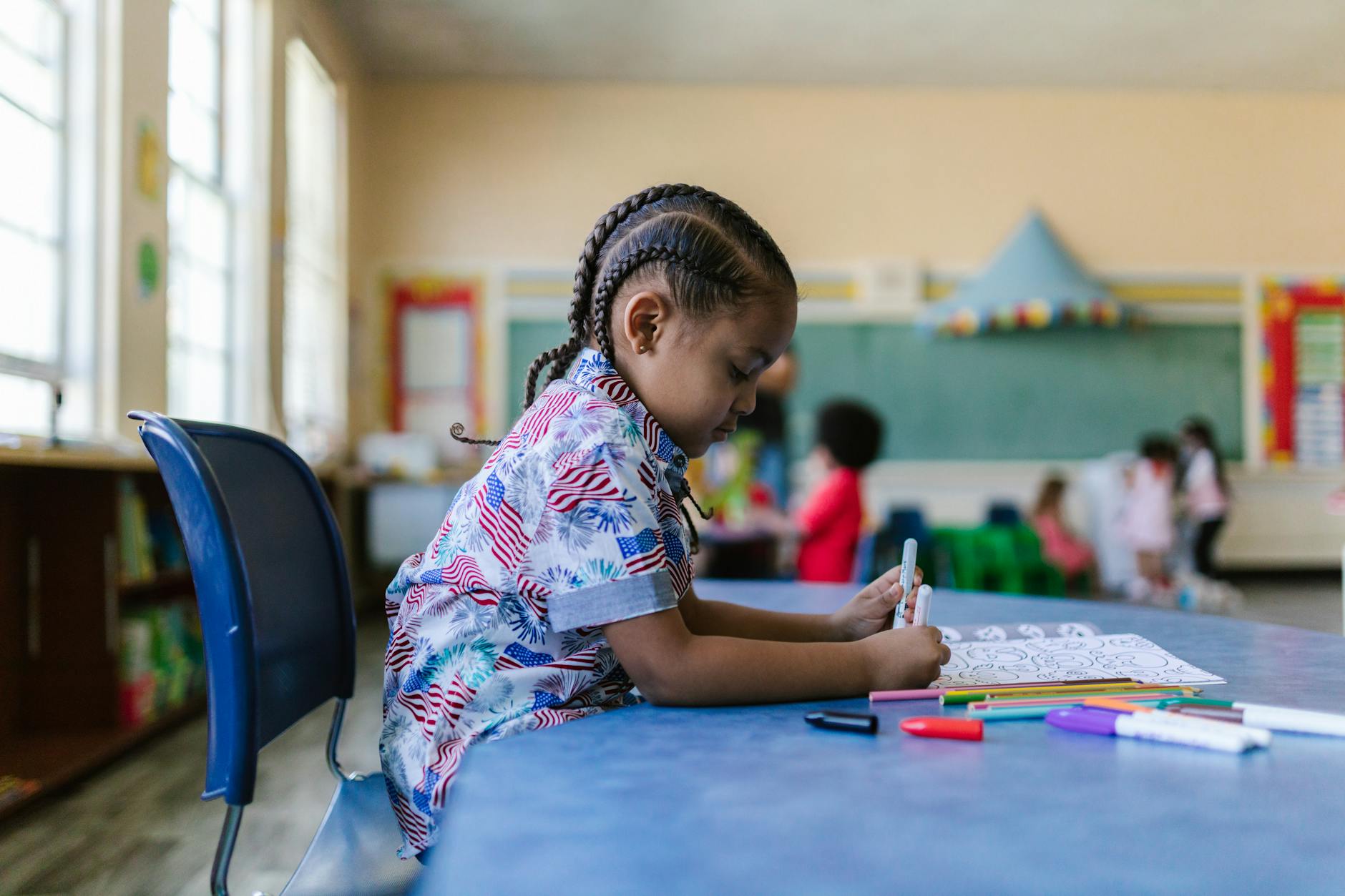
The number two pencil isn’t actually ranked. There’s no number one pencil sitting in some elite drawer somewhere. The number refers to the hardness of the graphite, and the fact that almost nobody knows this after spending twelve years clutching those pencils tells you something about how school works. We absorb rituals without questioning them. We fill in bubbles, we sharpen the point, we move on.
That’s what makes back to school trivia so satisfying to play. Everyone’s been through it. Everyone thinks they remember it clearly. And almost everyone is wrong about at least a few things they’d bet money on. I’ve run these questions at teacher orientation nights, at end-of-summer block parties, at bar trivia where half the room still had a sunburn. They land differently than most trivia because they’re personal. People don’t just guess. They argue from memory.
Here are 50 back to school trivia questions. Some will make you feel ten years old again. Some will start fights.
The Stuff in Your Backpack
1. What Crayola crayon color was renamed “peach” in 1962 due to its original, now-offensive name?
I’ve watched tables go dead quiet when this one lands. Some people know it immediately and look uncomfortable. Others guess wrong colors entirely. The original name was “flesh,” and the rename happened during the Civil Rights Movement, though Crayola has never explicitly confirmed the connection.
Show Answer
The crayon originally called “flesh” was renamed “peach.” Most wrong answers go to “Indian Red,” which was also renamed , but not until 1999, and it was actually named after a pigment from India, not Native Americans.
2. How many crayons were in the original Crayola box when it debuted in 1903?
People anchor to the boxes they grew up with. If you had the 64-count with the sharpener, you think big. If you were a 24-count kid, you guess low. The real number is smaller than almost anyone expects.
Show Answer
8 crayons. The original box cost a nickel. The colors were black, brown, blue, red, purple, orange, yellow, and green.
3. What does the “No. 2” on a standard pencil refer to?
I mentioned this up top, but it’s worth asking because the confidence in the room is always misplaced. People will say it’s a brand ranking, a quality grade, even a size measurement.
Show Answer
The hardness of the graphite. On the HB graphite grading scale, No. 2 corresponds to HB , a middle hardness that’s dark enough to be read by scanning machines but not so soft that it smudges everywhere.
4. The Trapper Keeper, the iconic school binder with the flap closure, was made by what company?
If you’re over thirty, this question unlocks something. The velcro sound. The Lisa Frank dolphins on the cover. The way it barely fit in your desk.
Show Answer
Mead. Introduced in 1978, it became one of the best-selling school supplies in American history. At its peak, more than 75 million had been sold.
5. What common school supply was invented in 1958 by a Japanese stationery company and works by snapping off dull blade segments?
This one plays fast. People either see it instantly or they spiral.
Show Answer
The snap-off blade utility knife (box cutter/craft knife), invented by Olfa Corporation. The inventor, Yoshio Okada, was inspired by breaking segments off a chocolate bar.
6. Elmer’s Glue uses a bull as its logo. What’s the bull’s name?
People know the logo but almost nobody knows the name. And the backstory is weirder than the question.
Show Answer
Elmer. He’s named after Elsie the Cow’s husband , Elsie was the Borden Dairy mascot, and Borden Chemical Company originally produced the glue. So yes, the glue is branded after the husband of a milk cow. Make of that what you will.
7. What year did the first backpack designed specifically for students hit the market , was it closer to 1930, 1960, or 1980?
This is a good one because all three answers feel plausible depending on what you picture when you think “backpack.”
Show Answer
Closer to 1980. JanSport introduced its now-iconic student backpack in the early 1980s. Before that, kids mostly used book straps, satchels, or just carried their stuff. The common wrong answer is 1960, because people conflate hiking backpacks with school ones.
The Calendar Says So
8. In what month do most American public schools start the academic year?
Easy opener for this section, but it sets a trap for the next question.
Show Answer
August. While September still holds in parts of the Northeast and Midwest, the majority of U.S. school districts now start in August. The shift has been creeping earlier for decades.
9. What’s the name of the marketing push , now a multi-billion dollar retail event , that typically runs from mid-July through early September?
Everyone knows this phrase. Not everyone realizes the scale.
Show Answer
Back-to-school shopping season. In 2023, the National Retail Federation estimated families spent over $41 billion on back-to-school shopping in the U.S. alone, making it the second-largest retail event after the winter holidays.
10. In Japan, the school year begins in what month?
This trips up anyone who assumes the whole world runs on the September calendar. The answer is tied to one of the most beautiful natural events on the planet.
Show Answer
April. The school year begins with cherry blossom season, which is why so many anime series open with falling sakura petals and new school uniforms. It’s not just aesthetic , it’s literal.
11. Which U.S. state was the first to pass a compulsory school attendance law, requiring children to attend school?
People guess the big colonial states. They’re not entirely wrong to think that way.
Show Answer
Massachusetts, in 1852. It required children between ages 8 and 14 to attend school for at least three months per year. Mississippi was the last state to pass a similar law , in 1918.
12. The concept of summer vacation in American schools is often attributed to what?
This is one of those questions where the wrong answer is more interesting than most people’s right answer.
Show Answer
Urban heat and social reform, not farming. The common myth is that summer break exists so kids could help with the harvest, but farm kids actually attended school in summer and took off during planting (spring) and harvest (fall). Summer vacation was created in the 19th century because city schools were unbearable in the heat, and reformers worried about student and teacher burnout. The agrarian myth persists because it feels right.
13. In Australia, when does the school year typically begin?
Show Answer
Late January or early February. Their summer runs from December to February, so the school year starts at the end of their summer break. It’s the mirror image of the Northern Hemisphere, which sounds obvious until you actually try to picture Australian kids doing back-to-school shopping in January heat.
14. What federal holiday marks the unofficial end of summer and the symbolic start of the school year in the United States?
Show Answer
Labor Day, the first Monday in September. For many Northern states, school still starts the day after Labor Day by tradition or even by law , Michigan had a law requiring it until recently.
Halls of Pop Culture
15. In the 1986 movie “Back to School,” who plays the wealthy businessman who enrolls in college alongside his son?
If you know, you know. If you don’t, your guess will probably be funnier than the real answer.
Show Answer
Rodney Dangerfield. The film also features a young Robert Downey Jr. and a cameo by Kurt Vonnegut playing himself , he gets an F on a paper about his own book.
16. What 1990s Nickelodeon game show featured kids answering trivia questions and navigating a giant obstacle course, and premiered right around back-to-school season?
This one makes people physically lean forward. The nostalgia is violent.
Show Answer
“Legends of the Hidden Temple.” It premiered in September 1993. The Temple Guards still haunt people’s dreams. People also guess “Double Dare,” which is fair, but that premiered in 1986.
17. What sitcom featured a character named Screech, a school called Bayside High, and the eternal question of whether Zack and Kelly would stay together?
Show Answer
“Saved by the Bell.” It ran from 1989 to 1993 and was basically a documentary about the American high school experience if you squint hard enough and ignore the laugh track.
18. In the movie “Grease,” what high school do Danny and Sandy attend?
Confident wrong answers fly on this one. People say “Grease High” and then immediately hate themselves.
Show Answer
Rydell High. Named after Bobby Rydell, a real 1960s teen idol. The most common wrong answer is “Ridgemont High,” which is from “Fast Times at Ridgemont High” , a completely different movie, a completely different decade, a completely different vibe.
19. What back-to-school anthem by Naughty by Nature became a massive hit in 1991 and still gets played at every school event that tries to be cool?
Show Answer
“O.P.P.” Technically not a school song, but it dropped in September 1991 and became inescapable in hallways. If you were thinking of “Hip Hop Hooray,” that came later, in 1993.
20. The 2004 movie “Mean Girls” takes place at what fictional high school?
Everyone remembers the Burn Book. Fewer people remember the school name.
Show Answer
North Shore High School, set in Evanston, Illinois. Tina Fey wrote the screenplay based on the nonfiction book “Queen Bees and Wannabes” by Rosalind Wiseman.
21. In the “Harry Potter” series, what date does the Hogwarts Express depart for school each year?
Potter fans will fight you if you get this wrong. Non-fans will guess randomly and somehow land on a date in August.
Show Answer
September 1st, from Platform 9¾ at King’s Cross Station. It departs at exactly 11 a.m., which is one of those details that Rowling committed to and never wavered on.
22. What Disney Channel movie, first airing in 2006, follows a brother and sister who discover their new school is full of superheroes?
Show Answer
“Sky High.” Actually, this was a theatrical release from 2005 starring Kurt Russell and Kelly Preston. If you were thinking of a Disney Channel original, you might be mixing it up with “Minutemen” or “Avalon High.” The superhero school concept sticks in people’s heads and they blend the sources.
23. What Rock song, released as a single in 1972 by Alice Cooper, became an unofficial school’s-out anthem and is still played on the last day of school across America?
Show Answer
“School’s Out.” The full title is “School’s Out” and the album of the same name dropped in June 1972. Cooper has said he wanted to capture the feeling of the last three minutes of the last day of school. He nailed it.
The Stuff They Actually Taught You
24. What does the acronym “GPA” stand for?
Warm-up. But I’ve seen adults blank on this, which tells you how fast school leaves the conscious mind.
Show Answer
Grade Point Average.
25. In the American grading system, what letter grade typically corresponds to a score of 90-100%?
Show Answer
A. Though grading scales vary by school and district , some schools set the A threshold at 93%, which has caused more parent-teacher arguments than any other number in education.
26. What subject does the acronym “STEM” stand for?
Show Answer
Science, Technology, Engineering, and Mathematics. When Arts got added, it became STEAM, which sounds like a completely different thing and confuses everyone at school board meetings.
27. The SAT college entrance exam originally stood for “Scholastic Aptitude Test.” What does the College Board now say SAT stands for?
This is one of my favorite trivia facts because the answer is genuinely absurd.
Show Answer
Nothing. The College Board officially declared in 1997 that SAT doesn’t stand for anything. It’s just SAT. They dropped the meaning and kept the letters, which is a power move usually reserved for KFC.
28. What is the most commonly assigned novel in American high school English classes?
Every table thinks they know this one. They’re usually arguing between two books, and the argument itself is the best part.
Show Answer
“The Great Gatsby” by F. Scott Fitzgerald. It overtook “To Kill a Mockingbird” in recent surveys, though both are assigned so frequently that most Americans have strong opinions about at least one of them and dim memories of actually reading either.
29. What mathematical concept, typically introduced around 8th grade, involves finding the value of an unknown variable represented by a letter?
Show Answer
Algebra. The word comes from the Arabic “al-jabr,” meaning “the reunion of broken parts,” which is honestly a more poetic description than anything in the textbook.
30. In American schools, what is “recess”?
I include this in family-friendly rounds because younger kids love answering it and adults love debating whether it still exists.
Show Answer
A break period, usually outdoors, for unstructured play. Many schools have reduced or eliminated recess over the past two decades, which has sparked a genuine backlash. The American Academy of Pediatrics issued a statement in 2013 calling recess “a crucial and necessary component of a child’s development.”
The Bus, the Bell, and the Building
31. Why are American school buses painted yellow?
People assume it’s tradition. It’s actually science.
Show Answer
The specific shade , officially called “National School Bus Glossy Yellow” , was chosen in 1939 because it’s the fastest color for the human eye to notice in peripheral vision, even in early morning or late afternoon light. A man named Frank Cyr organized a conference at Columbia University to standardize it. He’s known as the “Father of the Yellow School Bus.”
32. What is the standard length of an American school class period in most middle and high schools?
Show Answer
About 45 to 50 minutes, though block scheduling (which uses 80-90 minute periods) has become increasingly common. The 50-minute period has been the default since the early 20th century, and there’s surprisingly little research supporting it as the optimal length for learning.
33. What’s the name for the practice of assigning students to specific classrooms based on their perceived ability level?
Show Answer
Tracking (also called streaming or ability grouping). It’s one of the most debated practices in education. Research consistently shows it benefits high-track students and harms low-track students, but it persists in most school systems.
34. What piece of school furniture was patented in 1880 by John Loughlin and featured a connected desk and chair, often bolted to the floor?
Show Answer
The school desk , specifically, the “fashion desk” or connected desk-chair unit. Those bolted-to-the-floor models stayed in classrooms for nearly a century. The discomfort was a feature, not a bug, according to educators of the era.
35. What does a school “valedictorian” literally mean, based on the Latin root?
Even people who were valedictorian often don’t know this.
Show Answer
It comes from the Latin “vale dicere,” meaning “to say farewell.” The valedictorian is literally the one who says goodbye , that’s why they give the farewell speech at graduation. The salutatorian, by contrast, comes from “salutare,” meaning to greet, which is why they give the opening speech.
36. What common school tradition involves students covering their textbooks in brown paper bags?
If you grew up doing this, you can probably still smell the paper. If you didn’t, this sounds insane.
Show Answer
Book covering. Schools required it to protect textbooks that were reused year after year. Brown paper grocery bags were the free option. Some kids used wallpaper samples or magazine pages. The practice has declined sharply with the rise of digital textbooks.
Numbers That Don’t Add Up
37. Approximately how many yellow school buses are on American roads each school day?
People wildly underestimate this. The number is staggering.
Show Answer
About 480,000. They transport 26 million students daily, making the school bus system the largest mass transit network in the United States , larger than all public transit systems combined.
38. What is the average amount an American family spends on back-to-school supplies for one child in elementary school , closer to $50, $150, or $300?
Show Answer
Closer to $300. The National Retail Federation’s 2023 survey found families with school-age children planned to spend an average of $890 total on back-to-school shopping, and that includes clothing, electronics, and supplies. Per-child supply costs alone typically run $150-$300 depending on the grade level and school requirements.
39. How many days are in a typical American public school year?
Teachers know this one in their bones. Everyone else guesses high.
Show Answer
180 days. This has been the standard in most states for decades. By comparison, Japan requires 243 days and South Korea requires about 220. The U.S. number hasn’t changed much despite decades of debate about whether it should.
40. What percentage of American teachers spend their own money on school supplies for their classrooms , closer to 30%, 60%, or 90%?
This question doesn’t get laughs. It gets silence.
Show Answer
About 94%, according to the National Center for Education Statistics. The average out-of-pocket spending is around $500 per year. In some surveys, it’s higher. This is one of those stats that makes the room go quiet, and it should.
41. As of 2023, approximately how many K-12 students attend public schools in the United States?
Show Answer
About 49.5 million. Add private school students and the total is roughly 55 million. That’s more than the entire population of Spain going to school every day in one country.
Traditions You Forgot You Had
42. What first-day-of-school tradition involves parents photographing their child holding a sign showing their grade level?
This one barely qualifies as trivia and more as a cultural checkpoint. But it tells you something about when you grew up based on whether you think it’s normal or bizarre.
Show Answer
The first-day-of-school photo (or “back to school” sign photo). It exploded on social media around 2010-2012 and is now so ubiquitous that stores sell pre-made chalkboard signs for it. Before social media, parents took first-day photos too , they just didn’t have a standardized format.
43. What school supply item, popular in the 1990s and 2000s, featured multiple ink colors in a single pen that you could switch between by pushing down different barrels?
I’ve seen grown adults get emotional about this question.
Show Answer
The multi-color click pen (sometimes called a shuttle pen or 4-color pen). BIC made the most iconic version with blue, black, red, and green. Trying to push two colors down at once was a universal experience and universally unsuccessful.
44. In many American elementary schools, what system uses colored cards (green, yellow, red) to manage classroom behavior?
Show Answer
The card flip system (or stoplight behavior chart). Green means good behavior, yellow is a warning, red means consequences. It’s been criticized by child psychologists for public shaming, but it remains common. If you got your card flipped to red, you remember exactly how it felt, and you remember who saw it happen.
45. What annual event, typically held in the first weeks of school, involves parents visiting their child’s classroom and meeting the teacher?
Show Answer
Back-to-School Night (also called Open House or Meet the Teacher Night). It’s the event where parents sit in tiny chairs, pretend to read the bulletin board, and silently judge the classroom hamster situation.
46. What physical education test, administered to millions of American students since the 1960s, includes events like the mile run, sit-ups, and the sit-and-reach?
The room divides into people who blocked this out and people who still carry the trauma.
Show Answer
The Presidential Fitness Test (now called the Presidential Youth Fitness Program). The original version was created under Eisenhower in 1956 after a study showed American kids were less fit than European kids. The pacer test (beep test) has since replaced the mile run in many schools, and it’s somehow even worse.
47. What does the “PTA” in school PTA meetings stand for?
Show Answer
Parent-Teacher Association. Founded in 1897, it’s one of the oldest volunteer child advocacy organizations in the U.S. The PTO (Parent-Teacher Organization) is a separate, unaffiliated thing, and the distinction has caused more hallway drama than you’d believe possible among adults.
The Last Bell
48. What common American school tradition involves students reciting a 31-word text while facing a flag each morning?
Show Answer
The Pledge of Allegiance. Written in 1892 by Francis Bellamy, it originally didn’t include the words “under God” , those were added by Congress in 1954 during the Cold War. Whether students can be required to recite it has been the subject of Supreme Court cases, and the answer is no, they can’t.
49. In what decade did the first official kindergarten open in the United States?
People guess way too late on this one. The concept is older than they think.
Show Answer
The 1850s. Margarethe Schurz opened the first American kindergarten in Watertown, Wisconsin, in 1856. It was German-language, based on Friedrich Froebel’s model. The first English-language kindergarten opened in Boston in 1860. The word “kindergarten” itself is German for “children’s garden.”
50. The iconic back-to-school supply , the composition notebook with the black-and-white marbled cover , has looked essentially the same since what century?
I save this one for last because it does something quiet. It makes people realize that the thing they bought last week at the drugstore, the thing they doodled on in fourth grade, the thing their grandparents might have carried to school, is essentially unchanged. The marbled pattern wasn’t a design choice. It was a manufacturing artifact from the way they bound the covers, and nobody ever bothered to update it because it just became what a notebook looks like. That’s back to school in a single object. The ritual outlasts the reason.
Show Answer
The 19th century. The composition notebook’s design dates to the 1800s. The marbled cover pattern was originally a side effect of the bookbinding process. Over 100 years later, it’s still the default. Some things in school never change, and maybe a few of them shouldn’t.
I write family trivia for the game nights where everyone, from the youngest to the oldest, is actually in the game. Based in Berlin, Germany for 8 years, my questions are clean, fair, and genuinely fun.
Latest posts by Isabella Russo, B.Ed. Primary Education
(see all)