75 Trivia Facts That Sound Made Up Until You Check Them Twice
Some trivia facts feel so wrong they loop back around to being true. These 75 questions are built around that exact moment of disbelief , and the arguments that follow.

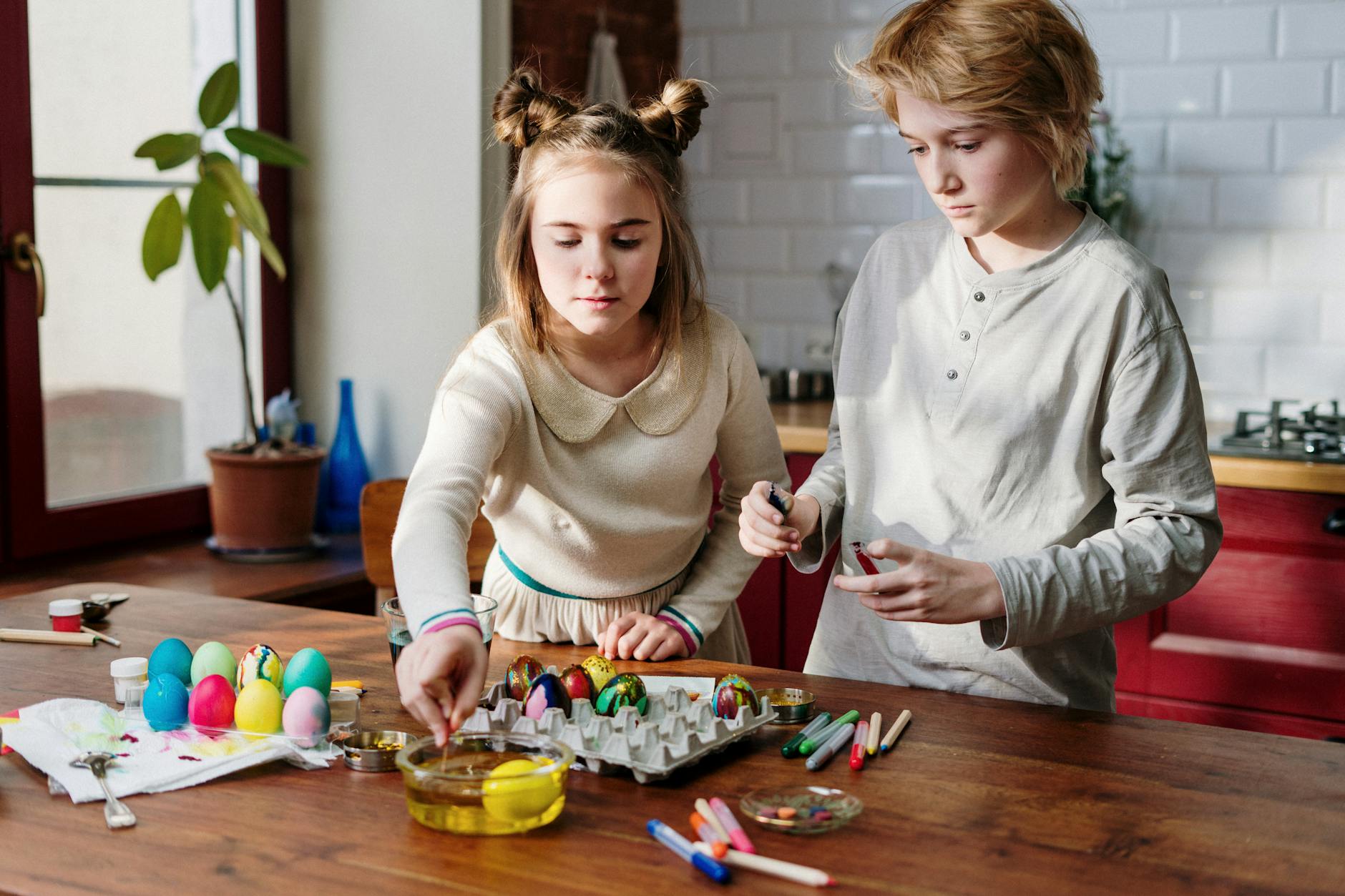
The Easter Bunny isn’t in the Bible. I know that sounds obvious when you see it written down, but I’ve watched a table of otherwise sharp adults pause and genuinely reconsider when I asked them to name the biblical origin of the Easter Bunny. That pause, that tiny crack of uncertainty about something you thought you knew cold, is where the best easter trivia questions and answers live. Easter sits at this strange intersection of ancient theology, pagan tradition, industrial candy production, and childhood nostalgia. Everyone knows something about it. Almost nobody knows as much as they think.
I’ve been running trivia nights long enough to know that Easter rounds do something particular to a room. The religious history questions split tables in half. The candy questions make grown adults competitive in ways that are honestly a little unsettling. And the cultural traditions from around the world? Those are where you get the beautiful silence of an entire room realizing they have no idea what happens in Finland on Easter Saturday.
These 125 questions are organized to move the way a good trivia night moves. We start where people feel confident, then the ground shifts. Some of these are layups. Some will make you argue with your phone. Let’s go.
1. What day of the week is Easter always celebrated on?
I include this one because it’s the warm-up pitch, and even warm-up pitches set a tone. Everyone gets this right, and that confidence is exactly what I’m building up to knock down.
2. What event does Easter celebrate in the Christian faith?
The number of people who say “the birth of Jesus” in a trivia setting is higher than you’d expect. Not because they don’t know, but because their mouth moves faster than their brain under pressure.
3. What is the 40-day period of fasting and penance before Easter called?
Most rooms nail this one, but ask them when Lent starts and you’ll see faces change.
4. What day marks the beginning of Lent?
Right on cue. People who don’t observe it often confuse this with Palm Sunday or just guess “the Monday before Easter” which isn’t even a thing.
5. What is the week leading up to Easter Sunday called?
Straightforward, but it sets up the next few questions nicely.
6. On what day during Holy Week did Jesus share his Last Supper with the apostles?
This is where the sequence starts working. People who got the last three right start feeling like biblical scholars. Then they hit the next question.
7. What does “Maundy” refer to in Maundy Thursday?
And here’s where the confidence breaks. I’ve seen entire church youth groups miss this one. The word comes from the Latin “mandatum,” meaning commandment, referring to Jesus’s commandment to love one another after washing his disciples’ feet.
8. What does Good Friday commemorate?
The more interesting trivia question is why it’s called “Good” Friday when it commemorates a crucifixion. Nobody has a definitive answer for that, by the way. Scholars still argue about it.
9. According to the Gospels, who discovered the empty tomb of Jesus on Easter morning?
This one generates real debate at tables with mixed denominations, because the Gospels don’t entirely agree on who was there. But one name appears in all four accounts.
10. What did Judas Iscariot receive for betraying Jesus?
People remember the silver. They rarely remember the number.
11. What animal did Jesus ride into Jerusalem on Palm Sunday?
Easy question, but I’ve learned to ask it early because it makes people feel good and sets up the harder biblical questions coming later.
12. What were the crowds waving as Jesus entered Jerusalem?
The clue is literally in the name of the day. But under trivia pressure, I’ve watched people say “olive branches” with absolute conviction.
13. What is the most popular Easter candy sold in the United States?
This starts arguments every single time. Cadbury eggs? Peeps? Jelly beans? The answer is less glamorous and more omnipresent than any of those.
14. Approximately how many Peeps are produced for Easter each year in the United States: 7 million, 70 million, or 700 million?
I love giving three options on production numbers because people’s sense of scale is consistently broken. Seven hundred million marshmallow chicks. Every year. Let that settle.
15. What company manufactures Peeps?
Nobody knows this. I’ve asked it dozens of times and I can count correct answers on one hand.
16. What was the original Peeps color?
Now they come in every color imaginable, but there was only one at the start.
17. What candy has a hard shell and is shaped like a small bean, making it a staple of Easter baskets?
This is the breather question. Everybody needs one after learning about 700 million Peeps.
18. According to the National Confectioners Association, Americans consume approximately how many pounds of candy during Easter: 6 million, 16 million, or 60 million?
See what I mean about broken scale? People consistently guess too low.
19. What part of a chocolate Easter bunny do most people eat first?
I love this question because everybody in the room immediately knows their own answer, and they assume everyone else does the same thing. They don’t.
20. In what decade did the Cadbury Creme Egg first appear in its modern form?
People wildly overestimate how old this product is. It feels like it’s been around forever, but “forever” in candy years isn’t that long.
21. What is the filling inside a Cadbury Creme Egg meant to resemble?
Everyone eats them. Surprisingly few people have stopped to think about what the filling is supposed to be, beyond “sugar in liquid form.”
22. Easter is the second-highest candy-selling holiday in the United States. What’s first?
Not even close, honestly.
23. What flavor is the classic yellow Peep?
This is a trick question and I’m not sorry about it. People want to say lemon. They want to say vanilla. The answer is more boring and more honest than either.
24. What country is widely credited with originating the Easter Bunny tradition?
This one splits rooms. Some people guess England. Some guess the Netherlands. The actual origin is specific enough that getting it right feels earned.
25. Why are rabbits associated with Easter?
The real answer involves ancient fertility symbolism that makes some people uncomfortable at family trivia nights, which is exactly why I include it.
26. What is the name of the Germanic goddess from whom the word “Easter” may derive?
I say “may” because scholars fight about this. The Venerable Bede wrote about her in the 8th century, and some historians think he made her up. That debate alone is worth the price of admission.
27. Why are eggs associated with Easter?
Multiple correct answers exist here, which is what makes it a great discussion question. The most historically grounded answer involves Lent.
28. What is the tradition of decorating eggs at Easter called in many Slavic countries?
If someone at your table knows this one cold, they probably have Eastern European heritage and they’ve been waiting for this moment their whole life.
29. The White House Easter Egg Roll has been an annual tradition since what president’s administration?
People guess way too early on this one. They want to say George Washington or Thomas Jefferson. The actual answer is more recent and has a surprisingly charming origin story.
30. On what part of the White House grounds does the Easter Egg Roll take place?
Fifty-fifty shot and people still get it wrong more often than you’d think.
31. What is the world’s most famous Easter egg collection, created by a jeweler for Russian royalty?
Even people who don’t know the name have seen pictures of these. The craftsmanship is absurd.
32. How many Imperial Fabergé Easter eggs were made: 20, 50, or 100?
People guess high because the eggs are so famous. The actual number is surprisingly modest.
33. In the tradition of egg hunts, what is a “golden egg” typically worth?
There’s no single right answer here, but the convention is pretty universal. I ask this one because it sparks memories.
34. In what country do children dress as Easter witches, going door to door with decorated willow branches in exchange for treats?
This is the one that breaks brains. People cannot believe this is real. But it is, and it’s wonderful.
35. In Bermuda, what do people fly on Good Friday as a symbol of Christ’s ascension?
Specific and strange and completely real. The homemade versions are works of art.
36. What do people in the town of Haux, France, make on Easter Monday using over 4,500 eggs?
The scale of this is what gets people. Four thousand five hundred eggs. One dish.
37. In Greece, what color are Easter eggs traditionally dyed?
If you’ve ever been to a Greek Easter, you know this immediately. If you haven’t, the answer is more specific than you’d guess.
38. What is the Greek Easter egg-cracking game called, where players tap their eggs against each other?
The competitive energy around this game is genuinely intense. Families have strategies.
39. In what country is it a tradition to pour water on people on Easter Monday?
Multiple countries do this, but the most famous version involves some truly committed splashing.
40. What do Australians often use as an Easter symbol instead of a bunny, since rabbits are considered pests there?
This is one of those questions that makes perfect sense the moment you hear the answer but is almost impossible to guess cold.
41. In which Scandinavian country do bonfires on Easter Eve supposedly ward off witches?
The Nordic Easter traditions are genuinely wild. This one has pre-Christian roots that go deep.
42. In the Philippines, what physically intense practice do some devotees perform on Good Friday to reenact Christ’s suffering?
This one changes the temperature in the room. It’s real devotion taken to a place that makes most Western audiences uncomfortable.
43. What is the traditional Easter bread in Italy called?
Italian food questions always generate confidence. This one tests whether that confidence is earned.
44. In what country is “Semana Santa” (Holy Week) celebrated with elaborate processions featuring hooded figures?
The images from these processions are striking and, to unfamiliar eyes, a little startling. The pointed hoods predate their unfortunate American association by centuries.
45. In Ethiopia, what is the name of the Orthodox Easter celebration, often considered one of the most vibrant in the world?
Ethiopian Orthodox Easter is genuinely one of the most visually stunning religious celebrations on Earth. The white clothing, the candles, the all-night vigil.
46. In what European country is it traditional to eat lamb-shaped cakes at Easter?
Several countries do this, but one is most closely associated with the tradition. The molds themselves are often family heirlooms.
47. How many days after his crucifixion did Jesus rise from the dead, according to Christian tradition?
The trick here is that people say “two” because they’re counting Friday to Sunday. The theological answer is specific.
48. In which garden was Jesus praying when he was arrested?
This one sorts the Sunday School graduates from the rest of the room.
49. Who sentenced Jesus to crucifixion?
People know the name. They sometimes struggle with the title.
50. According to the Gospels, what did Pontius Pilate do to symbolize that he was not responsible for Jesus’s death?
This gesture became such a common idiom that people sometimes forget where it comes from.
51. What prisoner did the crowd choose to release instead of Jesus?
The name is memorable once you’ve heard it. The irony of the choice is what makes it stick.
52. How many times did Peter deny knowing Jesus before the rooster crowed?
One of those questions where you either know it instantly or you’re guessing between two and four.
53. What was placed on Jesus’s head before his crucifixion?
A question that lands differently depending on the room. In church groups, it’s instant. In bar trivia, it’s about 60/40.
54. Who helped Jesus carry his cross on the way to Calvary?
This is a deep cut that rewards the people who paid attention in catechism class. The man was just a bystander, pulled from the crowd.
55. What is the hill where Jesus was crucified called?
Two names are acceptable here, and both are worth knowing.
56. According to the Gospel of John, what were Jesus’s last words on the cross?
Different Gospels record different final words. John’s version is the most concise and arguably the most powerful.
57. What happened in the Temple at the moment of Jesus’s death, according to the Gospels?
A dramatic detail that even people who’ve heard it before sometimes forget.
58. Who provided the tomb where Jesus was buried?
A wealthy man who was a secret follower. His name appears in all four Gospels but rarely makes it into casual conversation.
59. What was rolled in front of Jesus’s tomb to seal it?
Simple question, but it sets up the next one perfectly.
60. According to the Gospel of Matthew, who rolled the stone away from Jesus’s tomb?
People say the women who arrived. People say an earthquake. Matthew is specific about this.
61. Which apostle refused to believe in Jesus’s resurrection until he could see and touch the wounds?
His name became a permanent idiom. That’s a rough legacy.
62. How many days after his resurrection did Jesus ascend to heaven, according to the Book of Acts?
People conflate the resurrection with the ascension constantly. They’re separated by a very specific number of days.
63. Why does Easter fall on a different date each year?
This is one of those questions where the answer is genuinely more interesting than the question. The calculation involves the moon, the equinox, and a series of ecclesiastical decisions that would make your head spin.
64. What is the earliest possible date for Easter in the Western Church?
People always guess too late on this one. Easter can land shockingly early.
65. What is the latest possible date for Easter?
And it can land shockingly late. The range is wider than most people realize.
66. Why do Eastern Orthodox churches often celebrate Easter on a different date than Western churches?
The answer involves a calendar switch that happened over 400 years ago and that some churches simply chose not to follow. It’s a beautiful example of how history creates permanent divergence.
67. What Jewish holiday coincides with the timing of Easter, and what is the connection?
The linguistic connection between these two holidays is preserved in many languages but lost in English and German.
68. What is the term for the specific method used to calculate the date of Easter each year?
A word so obscure that knowing it makes you feel like you’ve unlocked a secret level.
69. In the 1965 TV special “A Charlie Brown Easter,” what does Charlie Brown struggle with? (Trick question.)
I love watching people confidently describe a special that doesn’t exist. Charles Schulz made Christmas and Thanksgiving specials, but Easter? Nope.
70. What is the name of the Peanuts Easter special?
The follow-up lands even harder after the trick question. Now people are second-guessing everything.
71. In the movie “Hop” (2011), what does the Easter Bunny’s son want to be instead of taking over the family business?
A kids’ movie question that adults with small children will nail and everyone else will struggle with.
72. What is the name of the Easter-themed horror movie franchise featuring a killer in a bunny mask?
Easter horror is a surprisingly populated genre. This particular entry has a cult following.
73. In what animated movie does a character called “Bunnymund” serve as the Easter Bunny?
The voice actor for this character is what makes the answer memorable. An Australian Easter Bunny with boomerangs.
74. The term “Easter egg” in technology and entertainment refers to a hidden feature or message. What 1979 video game is credited with the first known Easter egg?
The story behind this is great. The programmer hid it because Atari wouldn’t credit game developers by name.
75. What 2018 movie is literally built around the concept of pop culture Easter eggs?
The movie’s entire plot is an Easter egg hunt. The meta-ness is almost too much.
76. What classic musical features the song “Easter Parade”?
The song is more famous than the movie at this point, which tells you something about how culture filters over time.
77. In the TV show “The Walking Dead,” the producers hid actual Easter eggs in an Easter-themed episode. True or false?
This is the kind of question where people overthink it.
78. What Rankin/Bass TV special features a rooster named Stuffy who helps save Easter?
The deep Rankin/Bass cut. If someone gets this, they grew up watching the right channel at the right time.
79. What flower is most commonly associated with Easter?
If you don’t know this one, you’ve never been inside a church in April.
80. Easter lilies are native to what part of the world?
Not where you think. The flower that symbolizes Easter in America comes from very far away.
81. What is the average gestation period of a rabbit: 21 days, 31 days, or 63 days?
Given that rabbits are the symbol of Easter fertility, it’s fitting to know just how efficient they are at the whole reproduction thing.
82. What does the word “equinox” literally mean?
Easter’s date is tied to the spring equinox, so this feels earned. The Latin is elegant.
83. Baby chicks are an Easter symbol. What is a group of chicks called?
A surprisingly delightful collective noun.
84. What spring phenomenon, associated with Easter timing, is called a “Paschal” full moon?
The word “Paschal” does a lot of work in Easter vocabulary. It comes from the same root as Passover.
85. Lambs are a traditional Easter symbol. In Christian symbolism, what does the lamb represent?
The connection between this symbol and the Passover lamb is one of those threads that, once you pull it, connects the entire Old and New Testament.
86. Is Easter a pagan holiday, a Christian holiday, or both?
I have watched this question nearly end friendships. The honest answer is complicated, and both sides have evidence. But the historically responsible answer acknowledges the layering.
87. True or false: The word “Easter” appears in the original King James Bible.
This one is sneaky. People who know the Bible well often get this wrong because they assume a modern translation convention.
88. Hot cross buns are traditionally eaten on what day?
People want to say Easter Sunday. The buns have a specific day, and it’s not Sunday.
89. What does the cross on a hot cross bun represent?
Straightforward, but it leads naturally into the next question, which is much harder.
90. In what century do hot cross buns first appear in historical records?
People guess medieval. The documented history is actually surprisingly recent for something that feels ancient.
91. What meat is traditionally served at Easter dinner in many Western countries?
The connection to the answer for question 85 should be clicking right about now.
92. In what country is it traditional to eat pickled herring on Easter?
Scandinavian food traditions at Easter are their own wonderful universe.
93. What is a “Simnel cake” and when is it traditionally eaten?
A beautiful old tradition that most Americans have never encountered. The eleven marzipan balls on top have a specific meaning.
94. What is the day after Easter Sunday called in many countries?
In much of the world, this is a public holiday. In America, it’s just Monday.
95. Pretzels were once associated with Easter and Lent. What do the twists of a pretzel supposedly represent?
This origin story is disputed, but it’s too good not to ask about.
96. What is the largest Easter egg ever made, by weight: 500 pounds, 5,000 pounds, or over 15,000 pounds?
Scale questions are always my favorite because human intuition about large numbers is just broken.
97. How long did the longest Easter egg hunt in history last?
I’ll be honest, I include this question more for the discussion it generates than the answer itself. People’s guesses range from hours to weeks.
98. In what U.S. state was the largest Easter egg hunt by number of eggs held?
Florida. Of course it was Florida.
99. What percentage of American adults participate in some form of Easter celebration: 60%, 70%, or 80%?
Higher than most people guess, partly because Easter celebrations include secular traditions like egg hunts and candy that people don’t think of as “celebrating Easter.”
100. How much does the average American spend on Easter: $50, $100, or $175?
When I tell people the answer, they immediately start mentally tallying their own spending and realizing they’re above average. Or they’re lying to themselves.
101. What is the best-selling non-chocolate Easter candy in America?
Non-chocolate is the key qualifier here. People’s first instinct is wrong.
102. In 2023, what was the approximate total spending on Easter in the United States: $12 billion, $24 billion, or $36 billion?
The American Easter economy is staggering. And growing.
103. What famous piece of classical music by Handel is most associated with Easter, particularly its “Hallelujah” chorus?
Everyone’s heard it. Fewer people can name it correctly. And even fewer know it was originally written for a different occasion.
104. What famous painting by Leonardo da Vinci depicts the meal Jesus shared with his apostles before his crucifixion?
Everyone knows this painting. The trivia value is in the details people get wrong about it.
105. What hymn beginning with “Christ the Lord is risen today” was written by Charles Wesley in 1739?
If you grew up in a Protestant church, this melody is probably playing in your head right now.
106. What Irving Berlin song contains the lyrics “In your Easter bonnet, with all the frills upon it”?
Irving Berlin wrote so many American standards that it’s easy to forget which ones are his. This one is pure mid-century optimism.
107. Sandro Botticelli painted a famous scene of Jesus emerging from the tomb. But what is his more famous spring-themed painting called?
A lateral question that rewards art knowledge and connects spring to Easter without being obvious about it.
108. What Russian composer wrote “The Festival of Easter” overture?
A deep cut for the classical music crowd. The piece is based on Russian Orthodox Easter chants and it’s genuinely stirring.
109. In the nursery rhyme, what did Humpty Dumpty sit on?
I include this as a palate cleanser. But also because Humpty Dumpty is egg-shaped in every illustration and the word “egg” never appears in the rhyme. That fact alone is worth the question.
110. What is the name of the bunny in the classic children’s book “The Velveteen Rabbit”?
A book about becoming real through love. Appropriate for Easter in ways that go deeper than the rabbit connection.
111. In the children’s story “The Country Bunny and the Little Gold Shoes,” how many children does the mother bunny have?
A 1939 picture book with a surprisingly progressive message about a working single mother who becomes the Easter Bunny. The number of kids is absurd.
112. What color are the eggs that the Easter Bunny supposedly hides?
A trick question for the kids. The answer is all of them. But the conversation it starts about whether you’ve ever found a plain white egg in an Easter hunt is priceless.
113. What do you call the activity of using vinegar and food coloring tablets to decorate eggs?
A sense memory question. The smell of vinegar and the stained fingertips. Everyone over the age of six has been there.
114. In Peter Rabbit’s story by Beatrix Potter, what vegetable does Peter steal from Mr. McGregor’s garden?
People say carrots. People always say carrots.
115. In what country do people tap each other with braided willow switches on Easter Monday as a folk tradition?
The tradition is meant to bring health and youth to the person being tapped. It sounds stranger than it is. Or maybe exactly as strange as it sounds.
116. In what Central American country do people create elaborate “alfombras” (carpets) made of colored sawdust and flowers on the streets during Easter processions?
The artistry involved is breathtaking, and the carpets are destroyed by the procession walking over them. The impermanence is the point.
117. What Nordic tradition involves children dressing as Easter witches and going door to door, similar to Halloween?
We touched on this earlier with Finland, but the practice has a specific name in Swedish.
118. In England, what is the tradition of “pace egging”?
An old English tradition that’s fading but still survives in parts of Lancashire. “Pace” comes from the same root as “Pascha.”
119. In what country is Easter Monday known as “Dyngus Day” and celebrated with water fights?
We mentioned this earlier in its Polish context, but in American cities like Buffalo, New York, Dyngus Day has become a massive celebration in Polish-American communities.
120. What is the traditional Easter greeting in many Christian traditions, and what is the response?
This call-and-response has been spoken for nearly two thousand years. In dozens of languages. The simplicity of it carries real weight.
121. In what European country is it traditional to read or watch crime fiction (“Easter crime” or “Påskekrim”) during the Easter holiday?
This is my favorite Easter tradition in the world. An entire country reads murder mysteries at Easter. Even the milk cartons have short detective stories printed on them.
122. In Corfu, Greece, what do people throw from their windows and balconies on Holy Saturday morning?
The first time someone told me about this tradition, I thought they were making it up. They were not.
123. What is an “Easter Vigil” and when does it take place?
For many Christians, this is the most important service of the entire year. More important than Christmas Eve. That surprises people who aren’t churchgoers.
124. What is the “Paschal candle” and what does it symbolize?
Lit in the darkness of the Easter Vigil, this candle is one of the most powerful visual symbols in Christianity. The specifics of its markings are worth knowing.
125. What language does the word “Easter” come from, and what does its linguistic root most likely mean?
I save this one for last because it takes everything we’ve talked about and folds it into a single question. The word “Easter” doesn’t come from Latin or Greek or Hebrew. It comes from Old English, and its root is still debated by scholars. The Venerable Bede, writing in the 8th century, connected it to Eostre, a goddess of spring and dawn. Some modern scholars think Bede was right. Others think he was inventing a convenient origin story. What’s not disputed is that the word carries within it the oldest tension in Easter itself: the meeting point of Christian faith and the older rhythms of the natural world. The resurrection and the equinox. The tomb and the spring. Every question in this set, from candy to crucifixion to Norwegian murder mysteries, lives somewhere in that space. That’s why Easter trivia questions and answers hit differently than other holiday rounds. The holiday itself contains multitudes, and so does every room I’ve ever asked these questions in.

Some trivia facts feel so wrong they loop back around to being true. These 75 questions are built around that exact moment of disbelief , and the arguments that follow.
These aren't patronizing questions dressed up as easy. They're the kind that make a room come alive because everyone has a story attached to the answer.
These are the questions I keep coming back to because they do something to a room. Some make people shout, some make them second-guess everything, and one near the end tends to end friendships temporarily.
These funny trivia questions have been road-tested in rooms full of people who were sure they were right. Most of them weren't.