Queen Victoria didn’t invent the white wedding dress. She just made it impossible to wear anything else. Before she walked down the aisle in 1840, brides wore whatever their best dress happened to be. Red was popular. Blue was common. White was considered impractical and a little showy. One queen’s fashion choice became a “tradition” that people now defend as if it’s been around since the Bible. That’s weddings for you. Half the things we assume are ancient are barely older than the telephone.
I’ve run wedding trivia at bridal showers, rehearsal dinners, engagement parties, and one memorable bachelorette weekend where the maid of honor cried over a question about bouquet tosses. The people who search for wedding trivia tend to know a lot about their own wedding plans and almost nothing about why those plans exist. That’s where the fun lives. Here are 30 questions that play on exactly that gap.
The Ones Everyone Thinks They Know
1. In Western tradition, what does “something old, something new, something borrowed, something blue” end with?
Most people can rattle off the first four items. Almost nobody remembers the last line. It’s from an Old English rhyme, and the full version has five components, not four.
Show Answer
“And a sixpenny in her shoe.” The rhyme dates back to 19th-century Lancashire. The coin was meant to bring financial prosperity. Most people forget this line exists because nobody carries sixpence anymore.
2. Which hand does a wedding ring go on in the United States?
Easy opener, right? I use this one to warm up a room. Everyone gets it. But the follow-up is where it gets interesting.
Show Answer
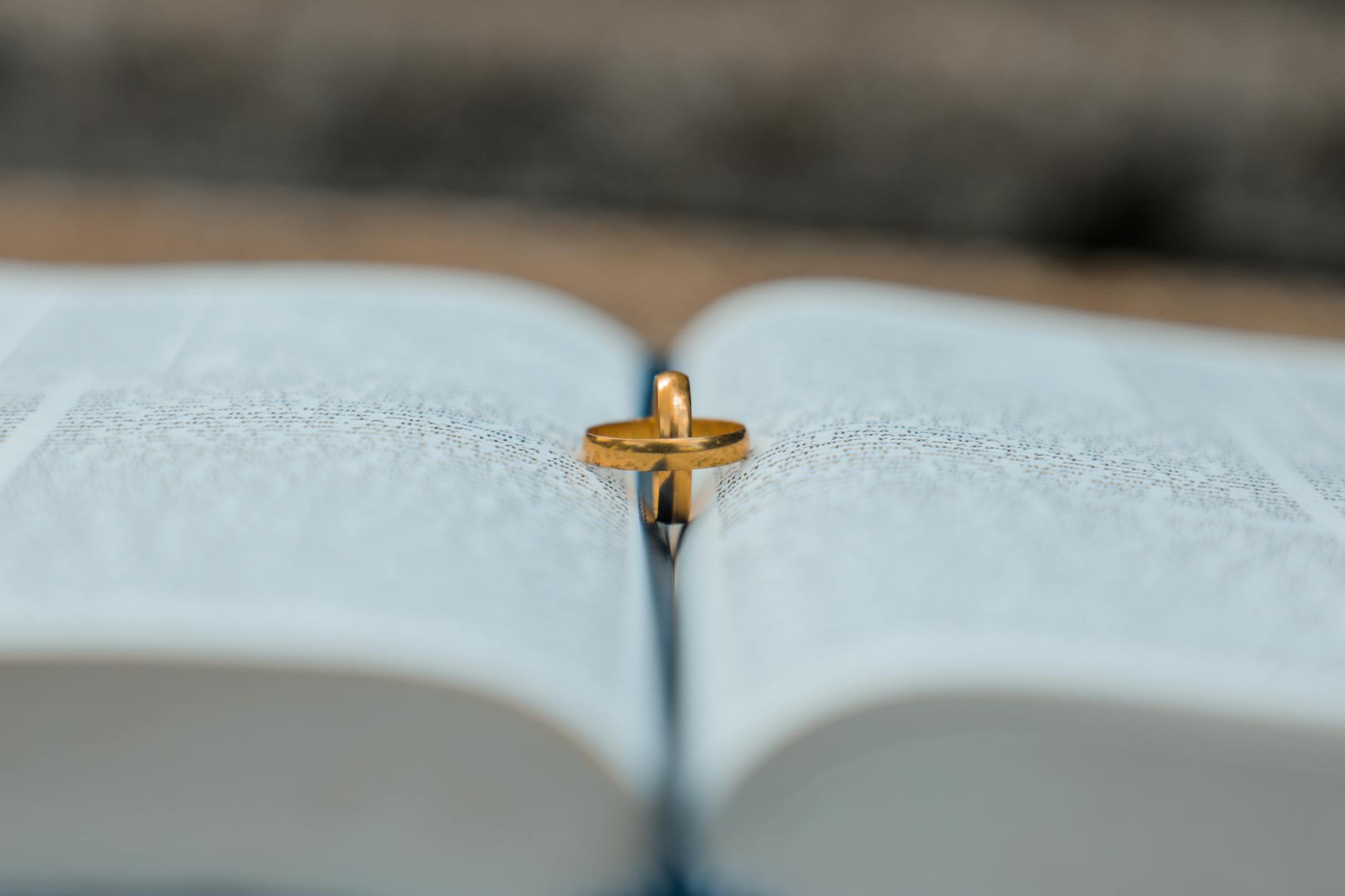
The left hand, fourth finger. The ancient Romans believed a vein ran directly from that finger to the heart, which they called the “vena amoris.” Modern anatomy says no such vein exists. We’ve been wearing rings on the wrong finger for romantic reasons for about two thousand years.
3. What’s the traditional gift for a first wedding anniversary?
This one splits rooms right down the middle. Couples who just got married tend to know it. Everyone else guesses something much more expensive.
Show Answer
Paper. The modern alternative is a clock. Most wrong answers land on silver or gold, which are 25th and 50th respectively. Paper feels underwhelming until you realize the tradition is about the fragility and blank-page potential of a new marriage.
4. In a traditional Western ceremony, who walks the bride down the aisle?
Show Answer
Her father. Though this tradition originated from the era when brides were literally transferred as property from father to husband. Knowing that context changes the vibe of the question every time I ask it.
5. What flavor is a traditional British royal wedding cake?
Americans almost always get this wrong. They project their own wedding cake preferences onto the monarchy, and it never works.
Show Answer
Fruitcake. Dense, alcohol-soaked fruitcake, often saved for christenings. The top tier of Prince William and Kate Middleton’s fruitcake was reportedly served at Prince George’s christening two years later. The common wrong answer is vanilla or chocolate, because Americans can’t imagine celebrating anything with fruitcake.
History That Feels Made Up
6. In ancient Rome, what did the bride carry that we still associate with weddings today?
Show Answer
A bouquet of herbs and spices, not flowers. The herbs were meant to ward off evil spirits and symbolize fidelity. Flowers replaced herbs over the centuries, but the bouquet itself is one of the oldest surviving wedding traditions.
7. Why were bridesmaids originally required to dress identically to the bride?
I love watching people work through this one. The real answer is so much darker than anyone expects.
Show Answer
To confuse evil spirits (and in some accounts, jealous suitors or bandits) so they couldn’t identify the real bride. The matching outfits were a decoy strategy. Every bridesmaid who’s complained about an ugly dress is participating in an ancient human shield tradition.
8. What does the word “honeymoon” literally refer to?
Show Answer
The tradition of the newlywed couple drinking mead (honey wine) for one full moon cycle after the wedding. The “honey” is the mead, the “moon” is the lunar month. It was essentially a month-long drinking prescription.
9. In what country did the tradition of a wedding cake originate?
Show Answer
Ancient Rome, where guests broke a barley cake over the bride’s head for fertility. The modern tiered cake evolved in England during the medieval period when guests would stack small cakes as high as possible and the couple would try to kiss over the pile.
10. What was the original purpose of the wedding veil?
There are actually several competing historical explanations for this one, but they all point in the same uncomfortable direction.
Show Answer
In arranged marriages, the veil hid the bride’s face so the groom couldn’t back out before the ceremony was complete. Other traditions hold it was to protect the bride from evil spirits or to symbolize modesty. None of the origins are particularly romantic.
Pop Culture Ceremonies
11. In what TV show did 30 million Americans watch a wedding where the bride said the wrong name at the altar?
Show Answer
Friends. Ross and Emily’s wedding. Rachel’s name came out of Ross’s mouth and the studio audience gasped so loudly the sound engineers had to adjust levels. The common wrong answer is Grey’s Anatomy, which has had enough weddings go wrong to fill its own category.
12. What 1990 film features a wedding scene where the groom is asked to speak now or forever hold his peace, and a stranger objects?
People always want to say The Graduate, but that’s 1967 and Dustin Hoffman doesn’t technically object during the ceremony.
Show Answer
Trick territory here. The most famous “objection” scene people picture is actually from The Graduate (1967), where Benjamin pounds on the glass. But objection scenes in the way people imagine them are surprisingly rare in major films. If you’re thinking of a 1990 film, you might be thinking of plot elements from Pretty Woman, though it doesn’t feature a traditional wedding objection. This question works best as a discussion starter because everyone is certain they’ve seen this exact scene and nobody can agree on where.
13. What song has been the most-played first dance song at American weddings for over a decade?
Show Answer
“At Last” by Etta James. It’s held the top spot across multiple wedding industry surveys since the early 2010s, occasionally trading places with “Thinking Out Loud” by Ed Sheeran and “A Thousand Years” by Christina Perri. But Etta James keeps coming back.
14. What movie features the line: “I’m just a girl, standing in front of a boy, asking him to love her”?
Show Answer
Notting Hill (1999). Julia Roberts to Hugh Grant. Not technically a wedding scene, but this line gets quoted in more wedding toasts than any actual wedding movie dialogue. I’ve heard it three times at real receptions.
15. In My Big Fat Greek Wedding, what does Toula’s father spray on everything to cure it?
Show Answer
Windex. Gus Portokalos believes Windex cures everything from poison ivy to psoriasis. This question gets the biggest laughs at showers because someone in the room always has a relative who does the same thing with a different product.
Numbers That Feel Wrong
16. What is the average cost of a wedding in the United States as of 2024?
I give a range for this one. Within $5,000 counts. Every room guesses low. Every single room.
Show Answer
Approximately $35,000, according to The Knot’s annual survey. That figure excludes the honeymoon. Couples who just started planning tend to guess $15,000 to $20,000. Couples who just finished planning tend to close their eyes and nod slowly.
17. What is the most popular month for weddings in the United States?
Show Answer
October. June held the crown for decades, but October has overtaken it in recent years. September and June are close behind. The shift happened as outdoor weddings became more popular and people realized June heat is miserable in a suit.
18. What percentage of married American couples met online as of recent studies?
Show Answer
Roughly 30-40%, depending on the study. A Stanford study found that by 2017, online meeting had become the most common way couples found each other, surpassing introductions through friends for the first time. This number climbs every year.
19. How many weddings take place in Las Vegas each year, approximately?
Show Answer
Around 100,000 to 120,000. That’s roughly 300 weddings per day. Clark County, Nevada issues more marriage licenses than any county in the country by a staggering margin.
Traditions From Somewhere Else
20. In a traditional Hindu wedding, what do the bride and groom walk around seven times?
Show Answer
A sacred fire (Agni). The ritual is called Saptapadi, or “seven steps,” and each circuit represents a vow. The marriage is considered legally complete after the seventh round.
21. In a traditional Jewish wedding, what does the groom break at the end of the ceremony?
Show Answer
A glass, usually wrapped in cloth and stomped underfoot. It’s meant to commemorate the destruction of the Temple in Jerusalem, a reminder of sorrow even in the midst of joy. The crowd shouts “Mazel tov!” immediately after.
22. In a traditional Korean wedding ceremony called a pyebaek, what do the bride and groom try to catch in a cloth?
Show Answer
Dates and chestnuts, thrown by the groom’s parents. The number caught is said to predict how many children the couple will have. I’ve seen this question make people from Korean families light up because they finally get to be the expert in the room.
23. In what country is it traditional for wedding guests to smash plates at the reception?
Show Answer
Germany. The tradition is called Polterabend and it happens the night before the wedding. Guests smash porcelain (not glass, which is considered bad luck) and the couple sweeps it up together to prove they can handle hard work as a team. Greece also has a plate-smashing tradition, but it’s not specifically tied to weddings.
The Ones That Start Debates
24. Is it a legal requirement to say “I do” during a wedding ceremony in the United States?
This one gets heated. People have strong feelings, and they’re usually wrong.
Show Answer
No. There’s no legal requirement to say “I do” or any specific phrase. The legal requirements vary by state but generally involve a valid license, an authorized officiant, and witnesses. You could technically grunt your consent and it would hold up.
25. What does RSVP actually stand for?
Show Answer
“Répondez s’il vous plaît,” which is French for “please respond.” It does not stand for “Reply Soon Very Please” or “Respond So Very Promptly,” both of which I have heard stated with total confidence at trivia nights.
26. True or false: diamonds became the standard engagement ring stone because of a centuries-old tradition.
Show Answer
False. De Beers launched the “A Diamond Is Forever” ad campaign in 1947, and within a generation, diamonds went from one option among many to the only socially acceptable choice. Before that campaign, engagement rings frequently featured sapphires, rubies, or opals. The “tradition” is a marketing campaign younger than most people’s grandparents.
27. According to Western etiquette, who traditionally pays for the wedding?
Show Answer
The bride’s family. This tradition also traces back to the concept of a dowry. In practice, modern couples split costs in every imaginable configuration, and asking this question at a rehearsal dinner will get you a very specific look from at least one parent in the room.
28. What U.S. state was the last to legalize interracial marriage?
Rooms go quiet on this one. They should.
Show Answer
Alabama, which didn’t officially remove its ban on interracial marriage from the state constitution until the year 2000. The Supreme Court’s Loving v. Virginia decision made such bans unenforceable in 1967, but Alabama kept the language on the books for another 33 years. And 40% of voters voted to keep it.
The Final Stretch
29. What is the term for the fear of marriage?
Show Answer
Gamophobia. From the Greek “gamos” meaning marriage. It’s a recognized psychological condition, distinct from simply not wanting to get married. I always place this one near the end because it gives the room permission to laugh at something that might be a little too real for someone present.
30. In what year did the U.S. Supreme Court legalize same-sex marriage nationwide?
I save this one for last because it’s the only wedding trivia question I’ve seen make an entire room go still before the answer. Not because it’s hard. Because it matters. At a bridal shower in 2019, a woman in the back said the year before I could reveal it, and her wife reached over and held her hand. That’s what the best wedding trivia does. It stops being a game for just a second and becomes something people actually feel.
Show Answer
2015. The case was Obergefell v. Hodges, decided on June 26. Justice Kennedy wrote that the petitioners asked for “equal dignity in the eyes of the law.” The Constitution, he wrote, grants them that right.
My 14 years running trivia nights in Manchester, UK have taught me more about writing good questions than any training could. The room tells you everything. I write based on what works in front of real people, not what looks clever on paper. My sets have been used by pub quiz leagues across the country, and I take the same care with every set I write.
Latest posts by Anna Klein
(see all)