40 Buffalo Wild Wings Trivia Questions That’ll Settle Every Argument at the Table
You've spent enough Tuesday nights there to feel like an expert. These 40 Buffalo Wild Wings trivia questions will test whether that confidence holds up.

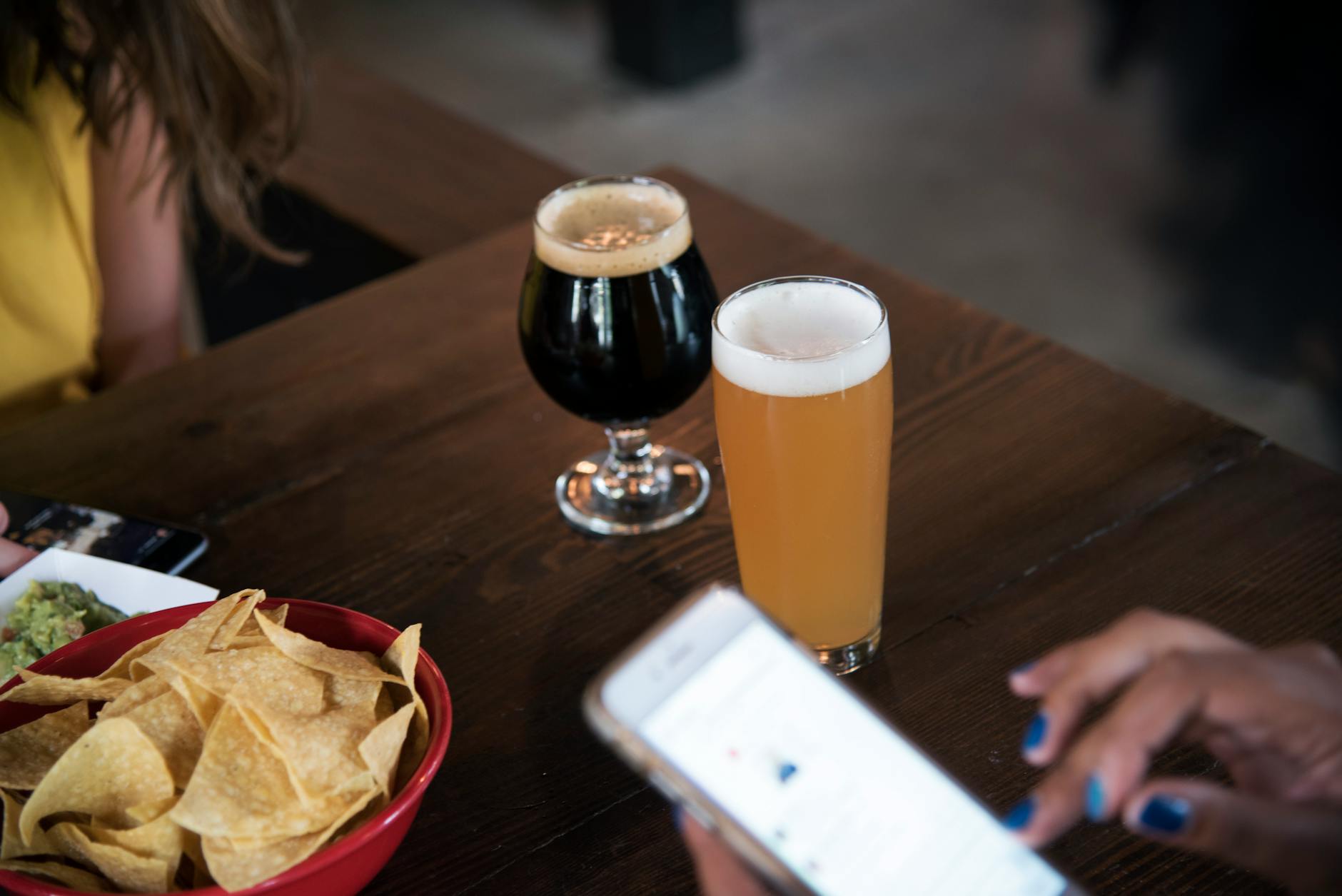
The oldest known recipe in human history isn’t for bread. It’s for beer. A 3,900-year-old Sumerian poem called the “Hymn to Ninkasi” is basically a brewing instruction manual set to verse, honoring the goddess of beer. We literally wrote poetry about this stuff before we figured out most of the alphabet. And yet the average person who considers themselves a beer person can’t tell you what makes a lager a lager. That’s the sweet spot where good beer trivia lives.
I’ve run pub quizzes for years, and beer rounds are where the most confident people in the room go quiet. The craft beer guy who can name every hop in his double IPA suddenly doesn’t know where Pilsner gets its name. The person who “doesn’t really know beer” nails five in a row on instinct. These 25 questions are built from that reality. Some will feel easy. Some will make you argue with your table. A few might change what you order next.
1. What are the four core ingredients in beer, as defined by the German Beer Purity Law (Reinheitsgebot)?
This question has been on a hundred pub quizzes, and people still miss one. They always forget the yeast, or they throw in hops twice. The funny thing is that the original 1516 law only listed three ingredients. Yeast wasn’t added until later because they didn’t fully understand what it was yet. They just knew something was happening.
2. What’s the difference between a lager and an ale?
I’ve watched tables of self-described beer nerds get this wrong by overcomplicating it. They start talking about flavor profiles and color, when the actual answer is much simpler and more elegant than all that.
3. The Czech city of Plzeň gave its name to what style of beer?
If you’ve ever held a Pilsner, this is free money. But I include it because it opens a door. Most people don’t realize that when Pilsner Urquell was first brewed in 1842, it was a genuine revolution. People had never seen a golden, clear beer before. It looked like liquid light.
4. What country consumes the most beer per capita?
This is the first real trap. Every room splits into two camps: Germany and Ireland. Both are wrong. The actual answer has held the top spot for nearly three decades straight, and it’s not even close.
5. What does “IPA” stand for?
This is a gimme for anyone who’s spent more than ten minutes in a taproom. But I keep it in the rotation because it lets the table catch its breath before I take it away again.
6. Hops are the flowers of a plant in the same family as what recreational crop?
The moment this question lands, someone at the table grins. They know. And they’re right. The botanical connection is real, and it never fails to get a reaction.
7. What color is a traditional Irish stout like Guinness when you hold a thin layer of it up to the light?
Everyone says black. Everyone. I’ve done this with actual Guinness in the room, held the glass up, and watched faces change. It’s one of my favorite beer trivia moments because the answer is right there and nobody sees it.
8. What is the “angel’s share” in brewing and distilling?
This is a term that sounds like it belongs in a poem, and the reality behind it is just as good. Whiskey folks tend to know this one. Beer people sometimes don’t, which I find endlessly amusing given that it applies to both.
9. Belgium has roughly how many active breweries: around 100, around 300, or around 400?
Belgium is a country the size of Maryland. Let that frame your answer. People who’ve been to Belgium tend to lowball this because they only visited Brussels and Bruges. People who haven’t been tend to overshoot because they’ve heard Belgium is “the beer country.”
10. What gas, besides carbon dioxide, gives Guinness its famously creamy, smooth head?
If you’ve ever poured a Guinness from a can and wondered what that little plastic ball inside was doing, this answer explains it.
11. What does the term “session beer” refer to?
This one sorts the room. People who drink a lot of beer know this instinctively. People who drink expensive beer sometimes don’t, because session beers aren’t usually the ones you brag about.
12. The Trappist beer designation requires that a beer be brewed within or in the vicinity of what?
People know Trappist beers are fancy. They know they’re Belgian. They sometimes know they’re made by monks. But the specific requirement catches people off guard with its simplicity.
13. What U.S. state has the most craft breweries per capita?
Oregon. Colorado. California. I hear all three within seconds every time. All wrong. The actual answer makes perfect sense once you hear it, but almost nobody gets there first.
14. What beer brand has been the world’s best-selling beer by volume for over two decades?
Americans say Bud Light. Europeans say Heineken. Neither is right. The answer is one of those facts that resets your sense of scale about the global beer market.
15. What common beer measurement does “IBU” stand for?
Craft beer menus have trained a generation to look at this number without fully understanding what it measures. Getting the acronym right is the easy part. Knowing what it actually tells you about the beer is harder.
16. What ancient civilization is credited with the first written beer recipe?
I mentioned this up top, so if you were paying attention, this is a gift. If you skimmed, well. That’s on you.
17. In what country did the beer style known as “porter” originate?
The name is the clue, and almost nobody follows it. Porter was named for the street and river porters of 18th-century London who drank it. But people hear “porter” and think of dark, moody pubs in Dublin. Ireland makes great porters, but it didn’t invent the style.
18. What does “ABV” stand for?
A palate cleanser. If someone at your table doesn’t know this, you now know who’s been ordering “whatever’s on tap” for the last decade. No judgment. Those people are sometimes the happiest drinkers in the room.
19. Lambic beers from Belgium’s Senne Valley undergo fermentation using what unusual method?
This is one of my favorite beer facts to deploy because it sounds wrong. It sounds like bad brewing. But it’s one of the oldest and most respected traditions in the beer world.
20. What’s the name of the German beer festival held annually in Munich, and in what month does it primarily take place?
Two-parter. The name is easy. The month is where people stumble, because the name itself is a lie.
21. What grain is traditionally used to brew Japanese sake?
I know, I know. “Sake isn’t beer.” Technically, though, sake is brewed, not distilled. It’s a fermented grain beverage. By every functional definition, it’s closer to beer than wine, despite being called rice wine. This question is a philosophical grenade, and I love it.
22. What brewery, founded in 1040 and still operating, is recognized by the Guinness Book of World Records as the oldest continuously operating brewery in the world?
People guess German monasteries, and they’re in the right neighborhood. But the specific name usually escapes them.
23. The word “brewer” shares its Old English root with what word for “bread”?
This is a tricky one, and I don’t expect most tables to get it. But the connection between beer and bread is ancient and deep. They’re siblings, born from the same grain, the same fermentation, the same human impulse to turn raw ingredients into something more.
24. What is a “zwickel” or “kellerbier”?
This is a question for the person at the table who’s been to Germany and won’t stop mentioning it. If they can’t answer this, you’ve earned something valuable: leverage.
25. Before hops became the standard bittering agent in beer, what mixture of herbs and spices, used for centuries across medieval Europe, served that purpose?
This is the question I save for the end because it does something rare. It makes people reconsider beer as a thing that was invented once and stayed the same. It wasn’t. For most of beer’s history, hops weren’t part of it at all. The answer is a word most people have never heard, and when they learn what it means, it opens up this whole shadow history of beer that existed before the version we know. Every brewer who’s gone back to experiment with it says the same thing: it tastes like time travel.

You've spent enough Tuesday nights there to feel like an expert. These 40 Buffalo Wild Wings trivia questions will test whether that confidence holds up.
Every Thanksgiving table has someone who thinks they know everything about the holiday. These 100 questions are built to find that person and humble them before dessert.
Most people think they know food. They've watched the shows, eaten the meals, argued about pizza. These 60 food trivia questions find the gaps between confidence and knowledge.
Most people who search for food trivia already know their way around a kitchen. These 25 questions are built to find the gap between what you've tasted and what you actually know.