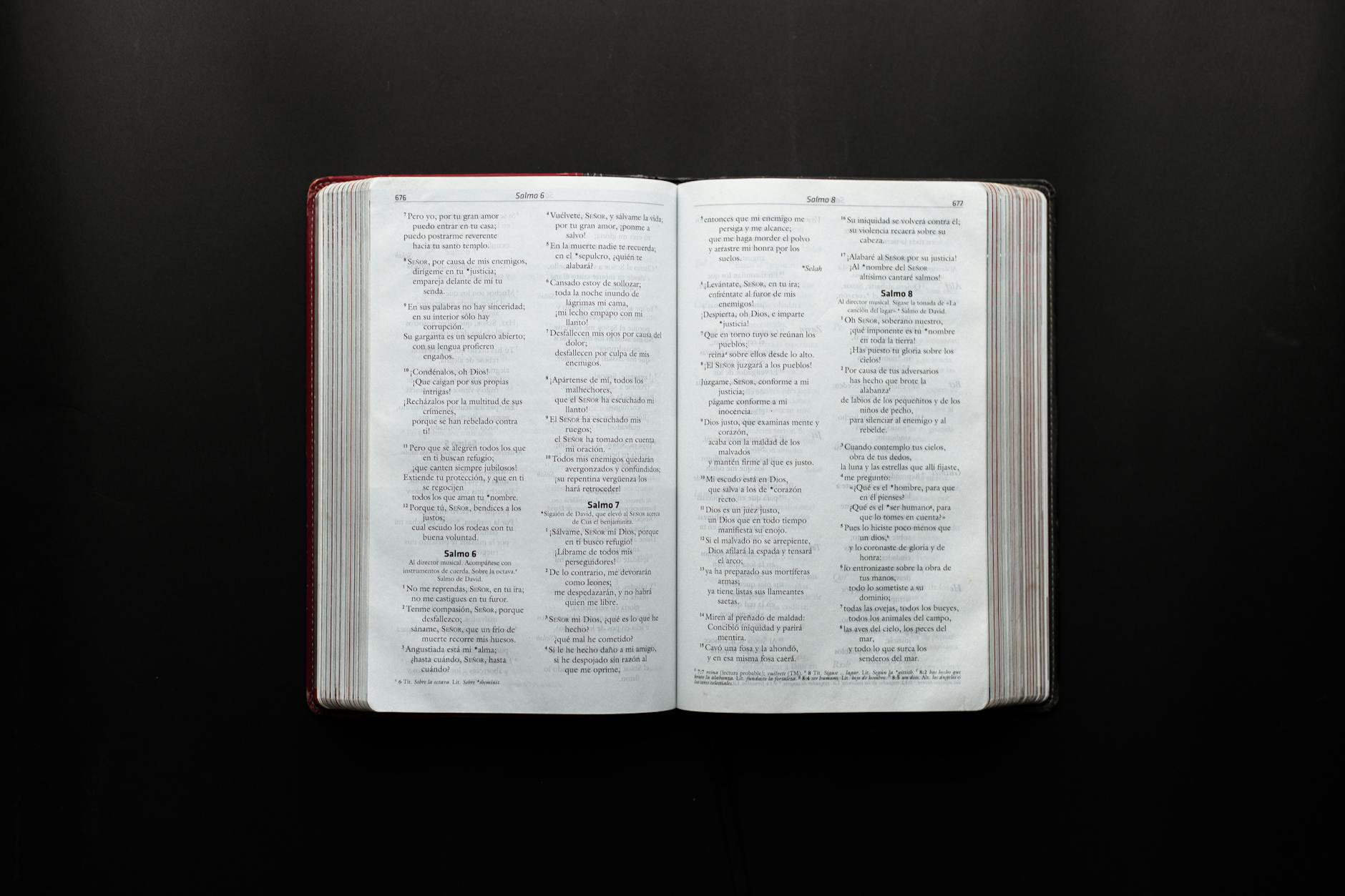
The apple in the Garden of Eden isn’t an apple. Most people who’ve read Genesis know this, or at least they think they know it, but ask them what the fruit actually was and the room goes quiet in a specific way. That silence is the whole game with bible trivia questions. People carry decades of sermons, VBS songs, and half-remembered verses in their heads, and the confidence that comes with all that familiarity is exactly what makes them vulnerable. I’ve watched a pastor’s wife miss a question about the Ten Commandments. I’ve watched a guy who’d never set foot in a church nail an obscure Old Testament question because he’d played a video game set in ancient Babylon. The Bible is one of those topics where everyone thinks they know more than they do, and that makes it perfect for trivia.
The Ones You Think You Know
1. How many of each animal did Moses bring onto the ark?
I open with this one at every faith-based event I run. It’s a trap, and it works every single time. People shout “two!” before their brain catches up with their mouth. Moses didn’t bring any animals onto the ark.
Show Answer
None. It was Noah, not Moses. The question exploits a well-documented cognitive bias called the Moses Illusion, where the brain accepts a plausible-sounding substitution without flagging it. Almost everyone falls for it the first time.
2. What’s the shortest verse in the King James Bible?
This is the freebie. The one that lets the room settle in and feel smart. But even here, I’ve had people confidently say “For God so loved the world” as if length is measured by how often you’ve heard something.
Show Answer
“Jesus wept.” (John 11:35) Two words. The context is worth knowing: Jesus is standing at the tomb of his friend Lazarus, about to raise him from the dead, and he still weeps. That tension is more interesting than the trivia itself.
3. In the creation account in Genesis 1, what does God create on the fourth day?
People rush to “animals” or “man” because those feel like the dramatic beats. But the order of creation trips up even people who’ve memorized it for Sunday school quizzes as kids.
Show Answer
The sun, moon, and stars. Most common wrong answer: animals (that’s day five for sea creatures and birds, day six for land animals). The fact that light exists on day one but the sun doesn’t show up until day four has launched more theological arguments than I can count.
4. How many books are in the Protestant Bible?
The Catholic players in the room always hesitate here, because they know the number is different for them. That hesitation is half the fun.
Show Answer
66. (39 Old Testament, 27 New Testament.) Catholic Bibles include 73, with the additional deuterocanonical books. I’ve had tables argue about whether the question was fair, which tells me it was.
5. What was the first of the ten plagues of Egypt?
People remember frogs, locusts, darkness, the death of the firstborn. The first plague gets lost because it doesn’t have the same dramatic imagery in the movies.
Show Answer
Water turned to blood (Exodus 7:20). Most common wrong answer: frogs. Frogs were second. The Charlton Heston version burned certain plagues into cultural memory and let others fade.
Where Confidence Gets Dangerous
6. Who was swallowed by the great fish in the Bible?
Easy enough. But the follow-up is what matters.
Show Answer
Jonah. The text says “great fish,” not whale. That distinction matters to exactly the kind of person who searches for bible trivia questions, and you can feel the energy shift when someone points it out.
7. How many days and nights was Jonah inside the great fish?
Now we’re testing whether you actually read it or just absorbed the general idea.
Show Answer
Three days and three nights (Jonah 1:17).
8. What material was the coat that Jacob gave to his son Joseph?
Everyone says “many colors.” And they’re not wrong, exactly. But the original Hebrew is more complicated than Andrew Lloyd Webber made it seem.
Show Answer
The Hebrew phrase “ketonet passim” is translated as “coat of many colors” in the KJV, but many modern scholars translate it as a long-sleeved or ornate robe. The “many colors” tradition is so embedded in culture that the actual translation barely matters anymore. But in a trivia room, it gives you something to talk about.
9. Who killed Goliath?
Don’t overthink it.
Show Answer
David. But here’s the thing that makes this question worth including: 2 Samuel 21:19 in some translations says Elhanan killed Goliath. The apparent contradiction has a long scholarly history. I’ve dropped this fact after giving the answer and watched entire tables pull out their phones.
10. What are the names of the four Gospels?
This separates the people who grew up in church from the people who watched History Channel documentaries. Both groups get it right, but at very different speeds.
Show Answer
Matthew, Mark, Luke, and John.
11. Which of the four Gospel writers was a tax collector?
The follow-up that earns its place. This is where the documentary crowd starts guessing.
Show Answer
Matthew (also called Levi). Most common wrong answer: Luke, possibly because people associate him with being educated and detailed, which somehow gets mapped onto “had a desk job.”
The Old Testament Is Wilder Than You Remember
12. Who is the oldest person mentioned in the Bible, and how old did they live to be?
People know this one but can never quite land on the number. They’ll say 900-something and hope that’s close enough.
Show Answer
Methuselah, who lived to 969 years old (Genesis 5:27). His name has literally become a synonym for extreme old age, which is one of those rare cases where the Bible’s cultural influence is hiding in plain sight.
13. What did Esau sell his birthright for?
The answer is both completely mundane and deeply human, which is why this story has stuck around for thousands of years.
Show Answer
A bowl of stew. Specifically, red lentil stew (Genesis 25:29-34). I love this question because the answer always gets a laugh. The idea of trading your inheritance for soup is absurd until you’ve been truly hungry, and then it isn’t.
14. In the Book of Judges, what did Samson use to kill a thousand Philistines?
People remember the hair. People remember Delilah. The weapon is the part that sounds made up.
Show Answer
The jawbone of a donkey (Judges 15:15). This is the kind of detail that makes people say “Wait, really?” even when they’ve heard it before. It never stops sounding like something from a fever dream.
15. What queen visited King Solomon to test his wisdom with hard questions?
She was essentially doing trivia before any of us were.
Show Answer
The Queen of Sheba (1 Kings 10:1). The Bible says she came with “hard questions” and that Solomon answered every one. The original trivia night host, if you think about it.
16. What did God tell Moses to do to get water from a rock at Horeb?
There are actually two rock-and-water stories in the Pentateuch, and mixing them up is one of the most common mistakes in Bible trivia. The instructions were different each time, and that difference cost Moses dearly.
Show Answer
Strike it with his staff (Exodus 17:6). The second time, at Meribah, God told Moses to speak to the rock. Moses struck it instead, and that act of disobedience is why he wasn’t allowed to enter the Promised Land. One verb. That’s all it took.
New Testament, Old Assumptions
17. How many wise men visited the baby Jesus?
Three, right? Everyone knows it’s three. The nativity scene has three. The Christmas carol has three. The answer is not three.
Show Answer
The Bible doesn’t say. Matthew 2 mentions wise men (magi) bringing three gifts: gold, frankincense, and myrrh. The number three was assumed from the gifts, but the text never specifies how many men came. This is the single most satisfying wrong answer in all of bible trivia questions. People will fight you on it.
18. What was the apostle Paul’s name before his conversion?
Straightforward for anyone who’s read Acts. But I include it here because it gives the room a win after that wise men question, and pacing matters.
Show Answer
Saul (Acts 13:9). He was Saul of Tarsus, a Pharisee who persecuted Christians before his experience on the road to Damascus.
19. At the wedding at Cana, Jesus performed his first miracle. What was it?
Most people get this right but can’t name the location. Cana is the part that separates casual knowledge from actual reading.
Show Answer
Turning water into wine (John 2:1-11). And not just any wine. The master of the banquet specifically noted it was the good stuff, served last instead of first. That detail is in the text and it’s wonderful.
20. Which apostle is traditionally known as “the doubter”?
His reputation has followed him for two thousand years based on one moment. That’s worth sitting with.
Show Answer
Thomas (John 20:24-29). He said he wouldn’t believe Jesus had risen unless he could touch the wounds. The phrase “Doubting Thomas” has outlived empires. Tradition holds that Thomas later traveled as far as India to spread Christianity, which is not the biography of someone who stayed uncertain.
21. What is the last book of the Bible?
Easy, but it gives me a chance to point out something that bothers me: people constantly call it “Revelations” with an S. It’s not plural.
Show Answer
Revelation (singular). The Revelation of Jesus Christ to John. Adding the S is one of those small errors that’s so widespread it almost feels correct.
22. On the road to Damascus, what happened to Saul that led to his conversion?
People know the broad strokes. The specific physical detail is what I’m after.
Show Answer
He was blinded by a light from heaven and heard the voice of Jesus (Acts 9:3-9). He was blind for three days before a man named Ananias restored his sight. The blindness is the part people forget, and it changes the story when you remember it.
The Final Stretch
23. What is the longest book of the Bible by number of chapters?
People guess Genesis or Isaiah. Neither is close.
Show Answer
Psalms, with 150 chapters. Most common wrong answer: Genesis (50 chapters). Psalms is also home to both the longest chapter in the Bible (Psalm 119, at 176 verses) and the shortest (Psalm 117, at 2 verses).
24. What are the first four words of the Bible in the King James Version?
This one works because people know the verse but haven’t thought about it as a sequence of specific words in a while. They’ll start with “In the beginning” and then pause, because the fourth word could be “God” or “was” depending on which version lives in their memory.
Show Answer
“In the beginning God” (Genesis 1:1 , “In the beginning God created the heaven and the earth”). Four words. The full sentence is ten. I’ve watched people silently mouth it to themselves before answering, which is one of my favorite things to see in a room.
25. According to the Gospel of Matthew, what were the last words Jesus spoke on the cross?
This is the question I save for last because it does something that good trivia should always do: it makes the room go still. People think they know, and then they realize they’re not sure which Gospel they’re remembering. Matthew, Mark, Luke, and John each record different final words, and that fact alone opens a door that most people haven’t walked through. The answer isn’t just an answer. It’s an invitation to go back and read more carefully.
Show Answer
“My God, my God, why hast thou forsaken me?” (Matthew 27:46, quoting Psalm 22:1). In Luke, the last words are “Father, into thy hands I commend my spirit.” In John, it’s “It is finished.” Three different Gospels, three different final statements, each carrying a completely different emotional weight. That’s not a contradiction. That’s four writers trying to capture the same impossible moment. And the fact that a trivia question can lead someone to notice that for the first time is why I keep doing this.
My 13 years running trivia nights in Phoenix, AZ have taught me more about writing good questions than any training could. The room tells you everything. I write based on what works in front of real people, not what looks clever on paper. I've written for JetPunk trivia, and I take the same care with every set I write.
Latest posts by Aaron Clark
(see all)