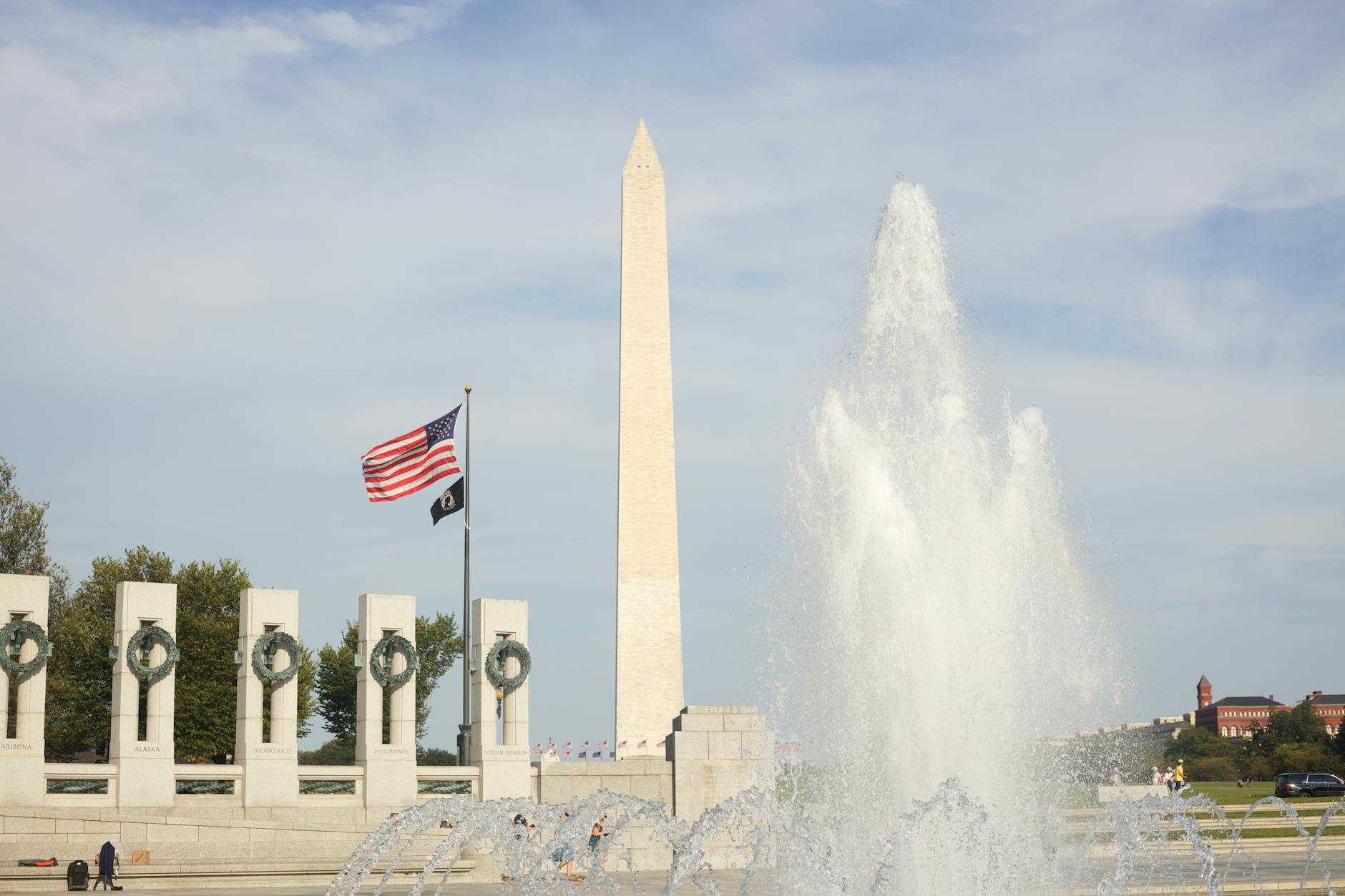
The Washington Monument isn’t the tallest structure in DC. It’s not even close, depending on how you measure. The Old Post Office Tower, the National Cathedral, and the Basilica of the National Shrine all have something to say about it. But ask a room full of people what the tallest structure in Washington is, and they’ll say the Washington Monument with absolute confidence. That’s the thing about DC trivia. People carry around a version of this city built from eighth-grade field trips and political dramas, and they’re sure it’s accurate. It mostly isn’t.
I’ve run DC trivia rounds in bars in Dupont Circle, Adams Morgan, and once in a basement in Georgetown where the ceiling was so low you could touch it without standing on your toes. The people who live there get tripped up by different questions than the people who visit. Both groups think they know more than they do. That’s what makes it fun.
These 50 DC trivia questions cover the monuments, the history, the neighborhoods, the politics, and the strange little details that make Washington one of the most trivia-rich cities on the planet. Some of these will feel easy. Some will start arguments. A few might change how you think about a place you thought you already understood.
The Stuff You Think You Know
1. What river does Washington DC sit on?
This is a warm-up, but I’ve watched confident people hesitate. Something about DC makes people second-guess even the obvious ones.
Show Answer
The Potomac River. The Anacostia River also runs through the city, and naming it instead is a defensible answer that’ll start a good argument, but the Potomac is what the question’s after.
2. Which president is memorialized with a seated statue inside a Greek-style temple on the National Mall?
If you’ve been to DC even once, this image is probably burned into your memory. Marble, enormous, contemplative.
Show Answer
Abraham Lincoln, at the Lincoln Memorial. Dedicated in 1922, which is later than most people assume for such an iconic structure.
3. DC’s license plates carry a protest slogan. What does it say?
This one always generates noise. People who’ve never been to DC have no idea the plates say anything political at all. People who live there can recite it in their sleep.
Show Answer
“Taxation Without Representation.” It’s been on the plates since 2000, and yes, it’s a real grievance, not just a bumper sticker. DC residents pay federal taxes but have no voting representation in Congress.
4. How many states border Washington DC?
Quick. Don’t overthink it.
Show Answer
Two: Virginia and Maryland. A surprising number of people say three. I have no idea where the phantom third state comes from, but it shows up every time.
5. What is the name of the museum complex, the world’s largest, that lines much of the National Mall?
If you know this, you probably also know the best part about it.
Show Answer
The Smithsonian Institution. It includes 21 museums and the National Zoo, and admission to all of them is free. That last detail is the part that shocks people who’ve never been.
6. The White House has a specific street address. What is it?
I love this question because people either know it instantly or realize they’ve never once thought about the White House having a mailing address like a normal building.
Show Answer
1600 Pennsylvania Avenue NW. The “NW” matters. DC’s quadrant system means there are technically addresses on Pennsylvania Avenue in other quadrants too.
7. What famous document is on permanent display at the National Archives in DC?
There are three, actually. But I’m asking for the one people name first.
Show Answer
The Declaration of Independence, the Constitution, and the Bill of Rights are all displayed there. Most people say the Declaration first, which counts. The three together are called the Charters of Freedom.
Where Confidence Gets Dangerous
8. Who designed the original layout of Washington DC?
This is where overconfidence starts to show. Everyone’s heard the name. Not everyone can spell it, and fewer can say it correctly.
Show Answer
Pierre Charles L’Enfant. He was a French-born architect and engineer who served in the Continental Army. His plan was grand, radial, and deliberately European. He was also fired before it was finished. Common wrong answer: people say Thomas Jefferson, who was heavily involved but wasn’t the designer.
9. What year did Washington DC officially become the capital of the United States?
People know it was “around the founding” and then they start guessing. I’ve heard everything from 1776 to 1812.
Show Answer
1790 is when Congress passed the Residence Act establishing it. The government actually moved there in 1800. Either answer is defensible depending on how you frame the question, but 1790 is the cleaner answer.
10. DC was originally a perfect diamond shape, carved from land donated by two states. One was Maryland. What was the other?
This one’s a layup for history nerds but a trap for everyone else.
Show Answer
Virginia. Virginia’s portion was returned in 1847 in a process called retrocession, which is why DC is no longer a perfect square. That returned land is now Arlington and part of Alexandria.
11. The tallest structure in Washington DC is not the Washington Monument. What is it?
I mentioned this up top. Now let’s see if you were paying attention, or if you assumed I was being metaphorical.
Show Answer
The Washington National Cathedral, at about 301 feet at its highest point. The Washington Monument is 555 feet tall, but it’s a monument, not a building. If you count it as a structure, it wins. The question is designed to be arguable, and the argument is the point. DC’s Height of Buildings Act keeps most structures low, which is why the skyline looks the way it does.
12. What is the name of the law that restricts the height of buildings in Washington DC?
Follow-up to the last one. Most people know DC has height limits. Almost nobody knows the name of the law.
Show Answer
The Height of Buildings Act of 1910. It generally limits buildings to the width of the adjacent street plus 20 feet, with some exceptions. It’s why DC feels so different from every other American city of its size.
13. What DC neighborhood is home to the historic U Street corridor, once called “Black Broadway”?
The nickname alone tells a story that most DC visitors never hear.
Show Answer
The Shaw neighborhood. In the early 20th century, U Street was the cultural heart of Black Washington, with theaters, jazz clubs, and restaurants. Duke Ellington grew up nearby.
14. How many electoral votes does DC have in presidential elections?
People who know the answer know why it’s that specific number. People who don’t know tend to guess way too high.
Show Answer
Three. This was established by the 23rd Amendment in 1961. DC gets the number of electors it would have if it were a state, but no more than the least populous state. Since the least populous states have three, DC gets three.
15. What was the original purpose of the building that now houses the National Museum of American History?
Trick question. It wasn’t repurposed.
Show Answer
It was always a museum. It opened in 1964 as the Museum of History and Technology, then was renamed in 1980. I include this question because people assume every grand building in DC had a previous life. Some were just built to be what they are.
The Deep Cuts Start Here
16. What is the only US president to have a statue in Washington DC’s official collection of presidential statues who never actually lived in the White House?
This requires you to think about who lived where and when. The answer is hiding in plain sight.
Show Answer
George Washington. The White House wasn’t completed until 1800, after his presidency ended. John Adams was the first president to live there.
17. What body of water was partially filled in to create the land where the Lincoln Memorial now stands?
If you’ve ever looked at old maps of DC, this makes perfect sense. If you haven’t, the answer sounds made up.
Show Answer
The Potomac River flats. The area was essentially swampland and tidal flats that were filled in during the late 1800s. The entire western end of the Mall is reclaimed land.
18. What is the name of DC’s professional football team as of 2024?
I include this because the timeline of name changes trips people up more than you’d expect.
Show Answer
The Washington Commanders. They were the Redskins until 2020, then the Washington Football Team for two seasons, then the Commanders starting in 2022. The number of people who confidently say “Washington Football Team” thinking that’s still current is remarkable.
19. DC’s Metro system opened in 1976. What was the first line to operate?
Metro riders who’ve lived there for decades get this wrong. They assume it was whichever line they use most.
Show Answer
The Red Line, running from Rhode Island Avenue to Farragut North. Five stations on opening day. Now the system has over 90.
20. What famous DC landmark was severely damaged by the British in 1814?
Most people get this right. What they don’t know is what came next.
Show Answer
The White House. The British burned it during the War of 1812. It was rebuilt and painted white to cover the fire damage, which is one popular origin story for the name, though it was called the White House before the fire too. The Capitol was also burned the same night.
21. What Smithsonian museum is the most visited museum in the United States?
People always guess the Air and Space Museum. And for a long time, they’d have been right.
Show Answer
The National Museum of Natural History has held the top spot in recent years, though Air and Space and the National Museum of African American History and Culture both draw enormous crowds. The rankings shift year to year, but Natural History is the safe answer.
22. What DC neighborhood takes its name from a colonial-era tobacco port?
This neighborhood predates DC itself. It was a town before Washington was even an idea.
Show Answer
Georgetown. It was established in 1751, nearly four decades before DC was created. It wasn’t formally incorporated into DC until 1871.
23. What is the official flower of Washington DC?
Not the cherry blossom. Everyone says the cherry blossom.
Show Answer
The American Beauty Rose. The cherry blossoms are iconic and beloved, but they’re not the official flower. They’re a gift from Japan, first planted in 1912. The rose is the one on the books. This question generates more “wait, really?” moments than almost any other DC trivia question I’ve used.
24. How many cherry blossom trees were in the original gift from Japan to Washington DC in 1912?
Since we’re on the subject. People either lowball this dramatically or go absurdly high.
Show Answer
Over 3,000 trees. But here’s the detail that makes it interesting: a first shipment of 2,000 trees arrived in 1910 and had to be burned because they were infested with insects and disease. The 1912 delivery was the successful second attempt.
25. What DC institution is nicknamed “The Nation’s Attic”?
The nickname tells you everything about what it feels like to walk through it.
Show Answer
The Smithsonian Institution, though the nickname is most often applied specifically to the National Museum of American History, which houses everything from the Star-Spangled Banner to Archie Bunker’s chair.
Politics, Power, and the Parts They Don’t Put on the Tour
26. Who is the current mayor of Washington DC? (As of 2024.)
People outside DC almost never know this. People inside DC have strong opinions about it.
Show Answer
Muriel Bowser, serving her third term. She’s been mayor since 2015 and is only the second woman to hold the office.
27. DC residents didn’t gain the right to vote in presidential elections until what decade?
When I ask this at trivia nights, the room gets quiet. The answer lands differently than most trivia answers do.
Show Answer
The 1960s. The 23rd Amendment, ratified in 1961, gave DC residents the right to vote for president. Before that, people living in the nation’s capital had no say in choosing its leader. Let that sit for a second.
28. What is the name of the congressional body that has oversight authority over DC’s local government?
This is the question that makes DC residents visibly frustrated.
Show Answer
The United States Congress. Under the Constitution, Congress has ultimate legislative authority over DC. The DC Council passes laws, but Congress can overturn them. It’s the reason statehood is such a charged issue.
29. How many voting members does DC have in the US House of Representatives?
Simple question. The answer is the whole point of those license plates.
Show Answer
Zero. DC has a non-voting delegate, currently Eleanor Holmes Norton, who can introduce legislation and vote in committee but cannot vote on the House floor.
30. What does the “DC” in Washington DC stand for?
I save this for moments when a room is getting too comfortable. It’s the kind of question that feels insulting until someone gets it wrong.
Show Answer
District of Columbia. Columbia was a poetic name for America, derived from Christopher Columbus. The number of adults who pause on this one is higher than you’d think.
31. What president authorized the construction of the Pentagon, which sits just across the river from DC in Virginia?
People guess Eisenhower because of the military connection. They’re off by a war.
Show Answer
Franklin D. Roosevelt. Construction began in 1941 and was completed in 1943, making it one of the fastest major construction projects in American history. It was built during World War II to consolidate the War Department’s scattered offices.
32. What annual event draws roughly 1.5 million visitors to DC each spring?
You already know. But do you know when it peaks?
Show Answer
The National Cherry Blossom Festival, which typically runs from late March through mid-April. Peak bloom, when 70% of the Tidal Basin trees are open, usually lasts only a few days and is notoriously hard to predict.
33. What historic DC hotel was the site of the 1972 break-in that led to the Watergate scandal?
The name is right there in the question, but I’m asking for the specific complex.
Show Answer
The Watergate complex, specifically the offices of the Democratic National Committee inside the Watergate office building. The complex also includes apartments, a hotel, and offices. It’s still there, still operating, still a little surreal to walk past.
34. What DC university is the oldest Jesuit and Catholic university in the United States?
If you know DC universities at all, this one comes quick.
Show Answer
Georgetown University, founded in 1789. It’s also home to one of the most competitive basketball programs in the Big East. The campus sits on a hill overlooking the Potomac, and it’s genuinely one of the most beautiful spots in the city.
35. What is the name of the cemetery directly across the Potomac from DC that contains the graves of more than 400,000 military service members?
Everyone knows this one. The question is whether you know what land it sits on.
Show Answer
Arlington National Cemetery. It sits on the former estate of Robert E. Lee. The Union Army began burying soldiers there during the Civil War, deliberately, so Lee could never comfortably return home. That detail changes how the place feels when you visit.
The Ones That Start Arguments
36. Is Washington DC a state, a city, or something else entirely?
This sounds too simple to ask. It isn’t.
Show Answer
It’s a federal district. Not a state, not technically a city in the traditional sense, though it functions as one. It has its own mayor and city council but operates under the authority of Congress. The “something else entirely” is the correct answer, and defining exactly what that something is has been an active political debate for decades.
37. What memorial on the National Mall has no statue, no building, and consists primarily of a black granite wall?
This is the memorial that changed how America thinks about memorials.
Show Answer
The Vietnam Veterans Memorial. Designed by Maya Lin, who was a 21-year-old architecture student at Yale when she won the design competition. The wall lists over 58,000 names. It was controversial when it was proposed and is now one of the most visited sites in DC.
38. What DC museum, which opened in 2016, required timed entry passes that sold out months in advance?
The demand for this museum was unlike anything the Smithsonian had ever seen.
Show Answer
The National Museum of African American History and Culture. It’s the newest Smithsonian museum on the Mall, and the bronze-colored building is architecturally striking. Timed passes are still recommended, though availability has improved.
39. What famous DC jazz musician was born in the Shaw neighborhood and became one of the most important figures in American music history?
If you know Shaw’s nickname was “Black Broadway,” this one follows naturally.
Show Answer
Duke Ellington. Born Edward Kennedy Ellington in 1899. There’s a school of music named after him in Georgetown, a mural in Shaw, and a bridge. The city claims him thoroughly, and rightfully so.
40. What is the only US state or territory where the NFL, NBA, NHL, MLB, and MLS all have teams based within its borders, despite not being a state?
The framing of this question is designed to make people argue. That’s intentional.
Show Answer
Washington DC, though this requires some flexibility. The Commanders play in Maryland, the Capitals and Wizards play in DC proper, the Nationals play in DC, and DC United plays in DC. If you count metro area, it works cleanly. If you insist on strict borders, arguments begin. And that’s the fun of it.
41. What is the name of the DC neighborhood that was largely destroyed to build the freeway system in the 1950s and 60s?
This question tends to land differently depending on who’s in the room.
Show Answer
Southwest DC saw massive demolition during urban renewal. Entire communities, predominantly Black, were displaced. The freeway construction and redevelopment reshaped the area completely. It’s a story that’s central to understanding modern DC but rarely makes it into the tourist version of the city’s history.
42. The Reflecting Pool on the National Mall stretches between which two landmarks?
You’ve seen this in a hundred movies. Picture it now.
Show Answer
The Lincoln Memorial and the Washington Monument. It’s 2,029 feet long and about 167 feet wide. In the original design, it was meant to mirror the grandeur of Versailles. In practice, it mirrors the Washington Monument, which is the more democratic outcome.
43. What was the original color of the Capitol dome?
People assume it’s always been white. It hasn’t always been the same dome, either.
Show Answer
The current cast-iron dome, completed during the Civil War, was painted white. But the original dome, a smaller wooden structure covered in copper, would have appeared brown or green as the copper oxidized. The current dome was built between 1855 and 1866, and Lincoln insisted construction continue during the war as a symbol that the Union would endure.
44. What is the busiest Metro station in the DC system?
Commuters think they know. They usually guess the station they personally hate the most.
Show Answer
Union Station has consistently been among the busiest, along with Metro Center and Gallery Place-Chinatown. Rankings shift depending on the year and methodology, but Union Station’s combination of Metro, Amtrak, and bus connections keeps it near the top.
45. What DC landmark has 897 steps to the top, though the elevator is the more popular option?
The number is specific enough to narrow it down, but the mental image takes a second to form.
Show Answer
The Washington Monument. The stairs were closed to the public for years. The elevator ride takes about 70 seconds. The 897 steps pass 194 commemorative stones donated by states, cities, and organizations. Most people don’t know the stones are there.
The Ones That Separate the Field
46. What DC neighborhood was historically known as “Little Ethiopia” due to its large Ethiopian immigrant population?
DC has one of the largest Ethiopian communities outside of Africa. This is where it’s centered.
Show Answer
The U Street/Shaw area, particularly along 9th Street NW. DC’s Ethiopian population is estimated at over 35,000 in the metro area, and the restaurant scene along this corridor is one of the best culinary experiences in the city.
47. What is the name of the DC neighborhood that sits on a literal island in the Anacostia River?
Most people who’ve lived in DC for years don’t know this place exists.
Show Answer
Kingman Island isn’t exactly a neighborhood, but it’s there, sitting in the Anacostia. The better-known answer might be that the area around Hains Point and East Potomac Park is essentially on reclaimed land surrounded by water. But for a true island community, some point to Roosevelt Island, which is technically in Virginia. DC geography is messier than it looks on a map.
48. The Library of Congress is the largest library in the world. Approximately how many items does it hold: 17 million, 70 million, or 170 million?
Give people three options and watch them talk themselves out of the right one.
Show Answer
Over 170 million items, including books, recordings, photographs, maps, and manuscripts. People consistently pick the middle number because it feels safe. The real number is staggering, and the collection grows by about 12,000 items every working day.
49. What is the only monument on the National Mall dedicated to a non-American?
This question requires you to mentally walk the Mall and check each memorial. Most people can’t do it without missing one.
Show Answer
The statue of Mahatma Gandhi, located near the Indian Embassy on Massachusetts Avenue, is sometimes cited, but it’s not on the Mall. The answer that works best is that there isn’t a traditional monument to a non-American directly on the Mall itself, though the Martin Luther King Jr. Memorial’s sculptor was Chinese artist Lei Yixin. However, if we expand slightly, the memorial to Tadeusz Kościuszko in Lafayette Square honors a Polish-Lithuanian engineer who fought in the American Revolution. DC trivia is full of moments like this where the confident answer dissolves when you look closely.
50. The words inscribed above the entrance to Union Station read: “He that would bring home the wealth of the Indies must carry the wealth of the Indies with him.” Who originally said it?
I always end with this one. Not because it’s the hardest question, but because of what happens in the room. People stare at the ceiling. They mouth the quote to themselves. They guess Samuel Johnson, Ben Franklin, some vaguely colonial-sounding name. Almost nobody gets it, and when I give the answer, there’s this pause where everyone reconsiders how much they actually notice about the buildings they walk through every day.
Show Answer
The quote is attributed to Samuel Johnson, though it originally derives from a Spanish proverb. It’s carved in stone above the entrance to a building that over 40 million people pass through every year. And almost none of them look up. That’s DC in a sentence. Everything is written down, carved in stone, etched into marble. The question is whether anyone’s reading it.
Country and culture trivia is where you find out who at the table has actually been curious about the world. I've been writing it from Munich, Germany for 14 years, with questions that reward genuine cultural knowledge.
Latest posts by Maximilian Andersen, B.A. Modern Languages
(see all)