60 Current Events Trivia Questions That Will Expose What You Only Half-Read
You scrolled past these headlines. You liked the posts. But do you actually remember what happened? These 60 current events trivia questions will find out fast.
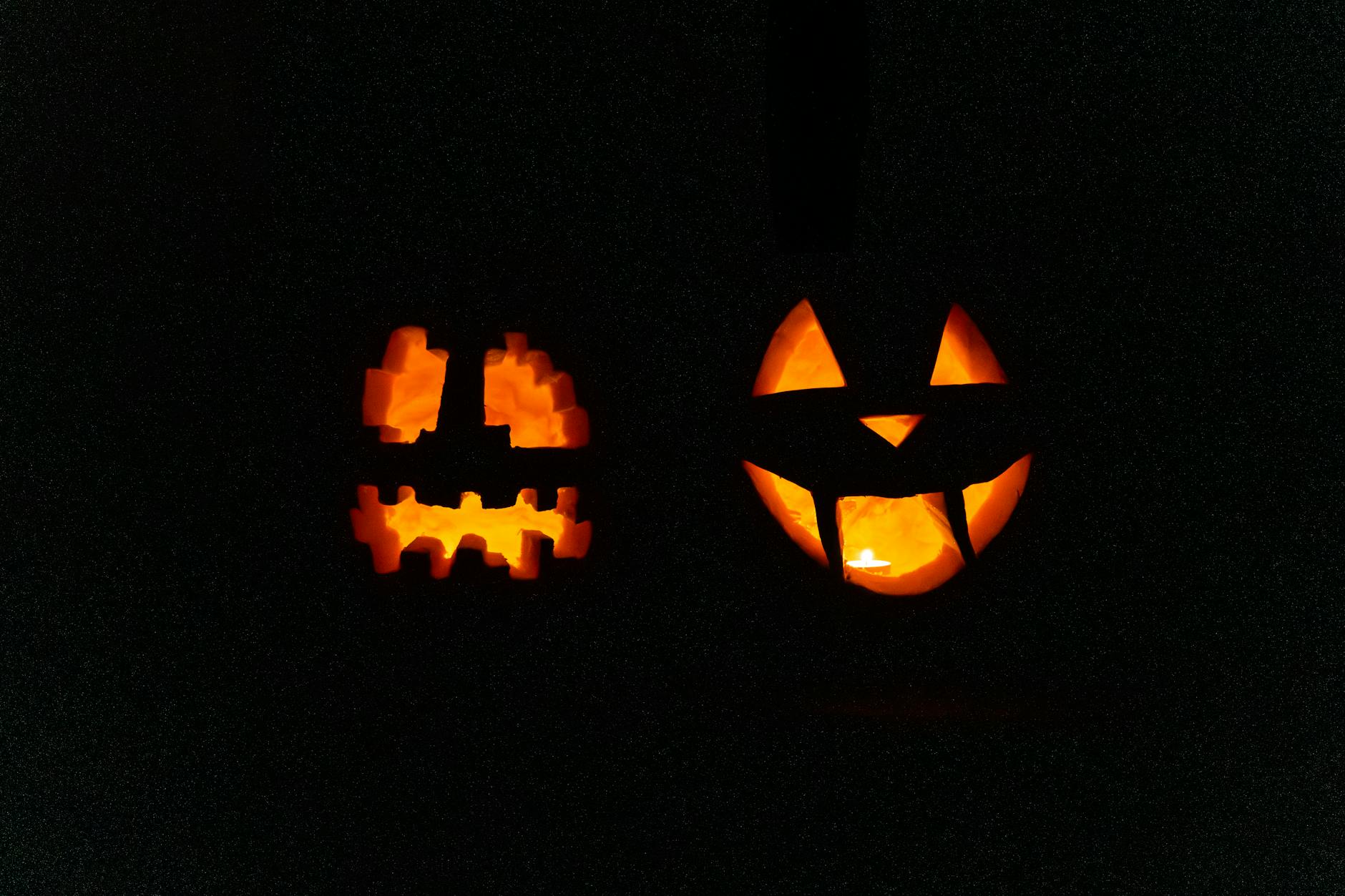
The original jack-o’-lanterns weren’t carved from pumpkins. They were carved from turnips, and if you’ve ever seen one, you know they look less like friendly porch decorations and more like something that crawled out of a medieval nightmare. That single fact has started more arguments at my trivia nights than almost any horror movie question I’ve ever written. People don’t want it to be true. It messes with their whole image of Halloween.
That’s the thing about halloween trivia questions. Everyone thinks they know this holiday. They grew up with it, they’ve got costume photos to prove it, and they can name at least three horror franchises. But Halloween sits at this strange intersection of ancient Celtic ritual, Catholic theology, American capitalism, and Hollywood myth-making. The confident people are almost always the ones who get tripped up worst. I’ve watched it happen dozens of times, and it never stops being satisfying.
Here are 50 questions I’ve collected, tested, and refined over years of running October events. Some will feel like layups. Some will make you argue with your phone. A few might genuinely change how you think about the holiday.
1. Halloween originated from an ancient Celtic festival. What was it called?
This is the warm-up, the one that separates people who’ve read one article from people who haven’t. But even the ones who get it right usually mispronounce it, which is its own kind of entertainment.
2. The Celts believed that on the night of Samhain, the boundary between the living and the dead became blurred. What did they wear to avoid being recognized by ghosts?
This is the origin story of costumes, and it’s darker than most people expect. There was nothing fun about it. You dressed up because you were terrified.
3. Which pope designated November 1st as All Saints’ Day, effectively moving a church holiday to coincide with Samhain?
This is the first real filter question. I’ve seen entire tables go silent on this one. The overlap between “knows Halloween history” and “knows papal history” is almost nonexistent.
4. “Halloween” is a contraction of what phrase?
People know this one or they don’t, and the ones who don’t have a wonderful moment of realization when they hear the answer. You can see the word reassemble in their heads.
5. In what country did the tradition of trick-or-treating most likely originate?
Everyone says America. Everyone. And every time, I get to watch them process the fact that it wasn’t.
6. What was “souling,” the medieval practice considered a precursor to trick-or-treating?
I love this one because the answer sounds like something a kid would make up as an excuse to get more candy. But it was dead serious. Literally.
7. Before pumpkins, jack-o’-lanterns were traditionally carved from what vegetable in Ireland and Scotland?
I mentioned this in the intro, but it still catches people off guard when it shows up as a question. Knowing a fact and committing to it under pressure are two very different things.
8. What is the most popular Halloween candy sold in the United States by revenue?
This generates more confident wrong answers than almost any question I ask all year. People vote with their personal taste, not with data.
9. Candy corn was invented in which decade?
The answer to this one makes candy corn feel less like a modern nuisance and more like a survivor. It’s outlasted wars, pandemics, and the entire invention of chocolate bars.
10. What was candy corn originally called when it was first marketed?
Nobody gets this. I’ve asked it maybe forty times and gotten two correct answers. Both were from people who worked in the candy industry.
11. Americans spend approximately how much on Halloween candy each year: $1.5 billion, $2.6 billion, or $4.6 billion?
I give the three options because without them, people guess absurdly low. Even with the options, most go for the middle number because it feels “reasonable.”
12. What popular Halloween treat was originally invented by a man trying to find a use for excess corn syrup?
13. In what year did hospitals and police stations first begin offering free X-rays of Halloween candy due to tampering fears?
The Halloween candy panic is one of America’s great moral panics. The answer here tells you something about how fear spreads faster than evidence.
14. According to the National Retail Federation, what has been the most popular adult Halloween costume in the United States for multiple recent years?
This one splits rooms. Half the people think culturally, half think literally. The literal thinkers win.
15. What is the most popular Halloween costume for pets?
I include this one because it makes people happy, and you need that after a string of questions that make them feel dumb.
16. In what decade did store-bought Halloween costumes first become widely available in the United States?
17. What material were most cheap Halloween masks made from in the 1960s and ’70s, creating that distinctive sweaty, hard-to-breathe-through experience?
Anyone over 40 can smell this question. The answer isn’t just a material, it’s a sense memory.
18. In the original 1978 film “Halloween,” Michael Myers’ iconic mask was actually a modified mask of what famous person?
This is one of the most well-known pieces of horror trivia in existence, and it still gets gasps from people hearing it for the first time. The image, once planted, never leaves.
19. What was the first horror movie to gross over $100 million at the domestic box office?
People always guess earlier than the real answer. They assume horror has always been big business. It hasn’t, not at that scale.
20. “It’s the Great Pumpkin, Charlie Brown” first aired in what year?
People anchor to the wrong decade on this one. They think of Peanuts as older than it is, or younger, depending on when they grew up watching it.
21. In “It’s the Great Pumpkin, Charlie Brown,” what does Charlie Brown keep getting in his trick-or-treat bag instead of candy?
If you grew up with this special, you can hear his voice saying it. If you didn’t, you’re about to understand a reference you’ve been missing for years.
22. What 1993 Disney movie, considered a box office disappointment on release, became one of the most beloved Halloween films of all time through home video and TV airings?
23. In “The Nightmare Before Christmas,” what is the name of Jack Skellington’s ghost dog?
24. The horror film “Halloween” (1978) was shot in how many days?
This is one of those answers that makes filmmakers in the room either inspired or furious.
25. What actor has played Dracula in the most films?
The obvious answer is Christopher Lee. The obvious answer is correct. But the number surprises people.
26. Pumpkins are fruits, vegetables, or berries?
I love asking this at parties because every possible answer sounds wrong to someone. The room splits three ways and nobody’s happy.
27. What U.S. state produces the most pumpkins?
People from the Midwest get this one. Everyone else guesses a state that “feels” autumnal.
28. What is the world record for the heaviest pumpkin ever grown, roughly: 1,500 lbs, 2,000 lbs, or 2,700 lbs?
29. What phobia is the specific fear of Halloween?
This is a vocabulary question disguised as a Halloween question, and it’s the kind of thing people either know instantly or have zero chance of guessing.
30. What common fear is called “arachnophobia”?
I include this as a breather. After the last few, people need a win. Let them have it.
31. In 1964, a New York woman named Helen Pfeil handed out what to trick-or-treaters she deemed “too old,” leading to her arrest?
This is one of those questions where the answer is so specific and so bizarre that it sounds made up. It isn’t.
32. Orson Welles’ 1938 radio broadcast of “The War of the Worlds” aired the night before Halloween. True or false?
People remember this as a Halloween broadcast. It’s close enough to feel right, which is exactly what makes it a good question.
33. What famous magician died on Halloween in 1926?
This is the rare trivia question where almost everyone gets it right, and it still feels good to answer. Some facts just belong to the holiday.
34. In the tradition of “Devil’s Night” in Detroit, what destructive activity became so widespread in the 1980s that the city organized a massive volunteer patrol called “Angel’s Night”?
35. What classic monster is associated with the legend of Transylvania?
Another breather. But I’ve learned you need these. A room that feels stupid stops playing.
36. According to superstition, what does it mean if you see a spider on Halloween?
People guess something sinister. The actual tradition is much gentler than they expect, and that contrast is what makes the answer land.
37. In Scottish Halloween tradition, young women would peel an apple in one long strip and throw it over their shoulder. What were they trying to learn?
38. What color cat is traditionally associated with bad luck and Halloween in the United States?
39. Bobbing for apples was originally a courting ritual. True or false?
This one always gets a reaction. People bob for apples at parties without any idea that it used to be essentially a dating game.
40. What vegetable did people in the Middle Ages hang over their doors on Halloween to ward off evil spirits?
41. In Mexico, “Día de los Muertos” (Day of the Dead) is celebrated on what dates?
Most people say October 31st. It’s not wrong exactly, but it’s not right either. The holiday’s relationship to Halloween is more complicated than a costume store would have you believe.
42. What flower is most associated with Día de los Muertos and is used to decorate altars and graves?
43. In what country do children go “trick-or-treating” by carrying carved watermelons instead of pumpkins?
This question exists because the image is so good. Carved watermelons. Just picture it.
44. In what European country is Halloween actually a national holiday, with schools and businesses closing?
People guess Ireland, which would be poetic given the Celtic origins. But the answer is somewhere that surprises them.
45. “Guy Fawkes Night” on November 5th has largely replaced Halloween celebrations in what country?
46. What was the original title of the horror classic “Hocus Pocus” during its development?
47. UNICEF’s Halloween campaign, where children collect money for charity while trick-or-treating, began in what decade?
The orange boxes. If you carried one, you remember the weight of the coins and the mild resentment of giving up candy bag space. If you didn’t, you’ve at least seen them.
48. What common household item do people in some parts of Appalachia place on their porches on Halloween night to keep evil spirits from entering?
49. What is the name of the phobia that describes an intense fear of the dark?
I put this near the end because it’s accessible and it gives people who’ve been struggling a chance to finish strong. Kindness in question design matters more than people think.
50. On the night of October 31, 1926, while Harry Houdini lay dying in a Detroit hospital, a séance was being held in his honor in another part of the city. His wife Bess later offered a $10,000 reward to any medium who could relay a secret code word that only she and Harry knew. That code was finally “received” during a séance in 1929. What was the secret message?
I always close with this one. The room goes quiet in a way that’s different from the rest of the night. It’s not a gotcha question. It’s a love story dressed up as a magic trick, which is pretty much what Halloween has always been: something spooky on the surface, something deeply human underneath. The best halloween trivia questions don’t just test what you know. They remind you why a holiday built on death and fear became one we celebrate with candy and costumes and our kids holding our hands in the dark.

You scrolled past these headlines. You liked the posts. But do you actually remember what happened? These 60 current events trivia questions will find out fast.
From the inventor of the cubicle to the real reason we say ASAP, these office trivia questions will make your next team event feel less like mandatory fun and more like an actual competition.
A set of 75 random trivia questions designed the way they land best: mixed up, unpredictable, and built to make you confidently wrong at least a dozen times.
A daily trivia question only works if it does something to the room before anyone answers. These 50 are built to do exactly that , one for every morning you need to wake people up.