Candy Land was invented in 1949 by a schoolteacher recovering from polio in a hospital ward full of children. She wanted to give kids who couldn’t move around much something that felt like an adventure. That’s the kind of thing that makes you look at a board game differently. And it’s the kind of thing that makes trivia games for kids worth building right, because these games carry more weight than we give them credit for.
I’ve run family trivia nights where a seven-year-old corrected a table of adults about how many spaces are on a Chutes and Ladders board. I’ve watched a dad get genuinely heated about whether Jenga counts as a kids’ game. These questions come from that world. Some are for the kids at the table. Some are for the adults who think their childhood memories are airtight. Most are for both.
The ones you think you know cold
1. In the classic game Operation, what’s the name of the patient you’re operating on?
Everyone pictures the red nose. Almost nobody remembers the guy has a name. He’s been lying on that table since the 1960s and most people treat him like a stranger.
Show Answer
Cavity Sam. The most common wrong answer is “Sam” with no first name, which is close enough for a kids’ table but not for this one.
2. How many colored spaces are there on a standard Candy Land board?
I’ve asked this to rooms full of parents who swore they played it last Tuesday. The guesses range wildly. People anchor on 50 or 100 because the game feels longer than it is.
Show Answer
134 spaces. Most people guess somewhere around 50-60, because memory compresses boring stretches. The game is actually longer than it feels in hindsight, which is saying something.
3. In Connect Four, how many rows and columns make up the grid?
This one splits rooms. People who play it a lot get it instantly. People working from memory always get one dimension wrong.
Show Answer
6 rows and 7 columns (a 6×7 grid). The most common wrong answer is 7×7. People assume it’s square. It isn’t.
4. What color is the ghost in the game Pac-Man that chases Pac-Man most aggressively?
Kids who play modern versions know this. Adults who played the arcade version know this in their bones but sometimes mix up which behavior goes with which color.
Show Answer
Red (named Blinky). He’s the one who speeds up as you eat more dots. Pinky, despite the name suggesting aggression, actually tries to get ahead of you rather than chase directly.
5. In the card game Uno, what must you say when you have one card left?
This is a gimme. I include it because every trivia set for families needs a moment where a six-year-old gets to feel like a genius. That matters.
Show Answer
“Uno!” If you forget to say it and another player catches you, you draw two cards. The penalty is what makes the rule stick in kids’ memories forever.
6. What shape are the pieces in Tetris?
Not what shapes, but what kind of shapes. There’s a specific mathematical name for them, and knowing it makes you feel unreasonably smart.
Show Answer
Tetrominoes. Each piece is made of exactly four squares. The “tetr” prefix is the giveaway, same root as the game’s name.
Where your memory starts lying to you
7. In Chutes and Ladders, what number is the highest square on the board?
People almost always get this right, but they hesitate. That hesitation is the whole question.
Show Answer
100. It’s a 10×10 grid. The hesitation comes from people wondering if maybe it’s 99, like there’s some trick. There isn’t. Sometimes the obvious answer is just the answer.
8. In the original Guess Who?, how many character faces are on each player’s board?
This is where confident adults start getting quiet. Everyone remembers the faces. Nobody counted them.
Show Answer
24 characters. Most people guess somewhere between 16 and 30. The number 24 doesn’t feel right to anyone until they see the board again.
9. What year was the first Mario Kart game released?
I’ve watched grown adults argue about this for five minutes. Everyone anchors on whatever console they played it on first and works backward from there.
Show Answer
1992 (Super Mario Kart for the Super Nintendo). People who grew up with Mario Kart 64 almost always say 1996 or 1997. People who grew up with the Wii version don’t even try.
10. In Hungry Hungry Hippos, how many hippos are in the standard game?
This should be easy. It is easy. But I’ve seen people say five with total confidence.
Show Answer
Four hippos. Their names are Happy, Henry, Homer, and Harry in the classic version. All H names, which is a detail that delights kids when you tell them.
11. What’s the name of the mystery-solving board game where players move through rooms in a mansion?
Not a hard question. The interesting part is that this game has two different names depending on where you live.
Show Answer
Clue (in North America) or Cluedo (everywhere else). It was originally Cluedo, invented in England. The name is a portmanteau of “clue” and “Ludo,” the Latin word for “I play.”
12. In Minecraft, what’s the name of the tall, black creature that teleports and hates being looked at?
Every kid in the room gets this before the question is finished. Every parent who’s watched over a shoulder gets it two seconds later. It’s the eye-contact rule that makes this creature unforgettable.
Show Answer
Enderman. The game mechanic of triggering aggression by making eye contact is genuinely unsettling, which is probably why every kid remembers it.
13. How many letter tiles are in a standard English Scrabble set?
Scrabble is technically for everyone, but every kid who grew up playing it with a parent remembers the sound of that bag. The tile count is one of those things competitive players know and casual players have never once considered.
Show Answer
100 tiles. This includes two blank tiles. Most people guess higher because the bag always seems bottomless at the start of a game.
The ones that start arguments
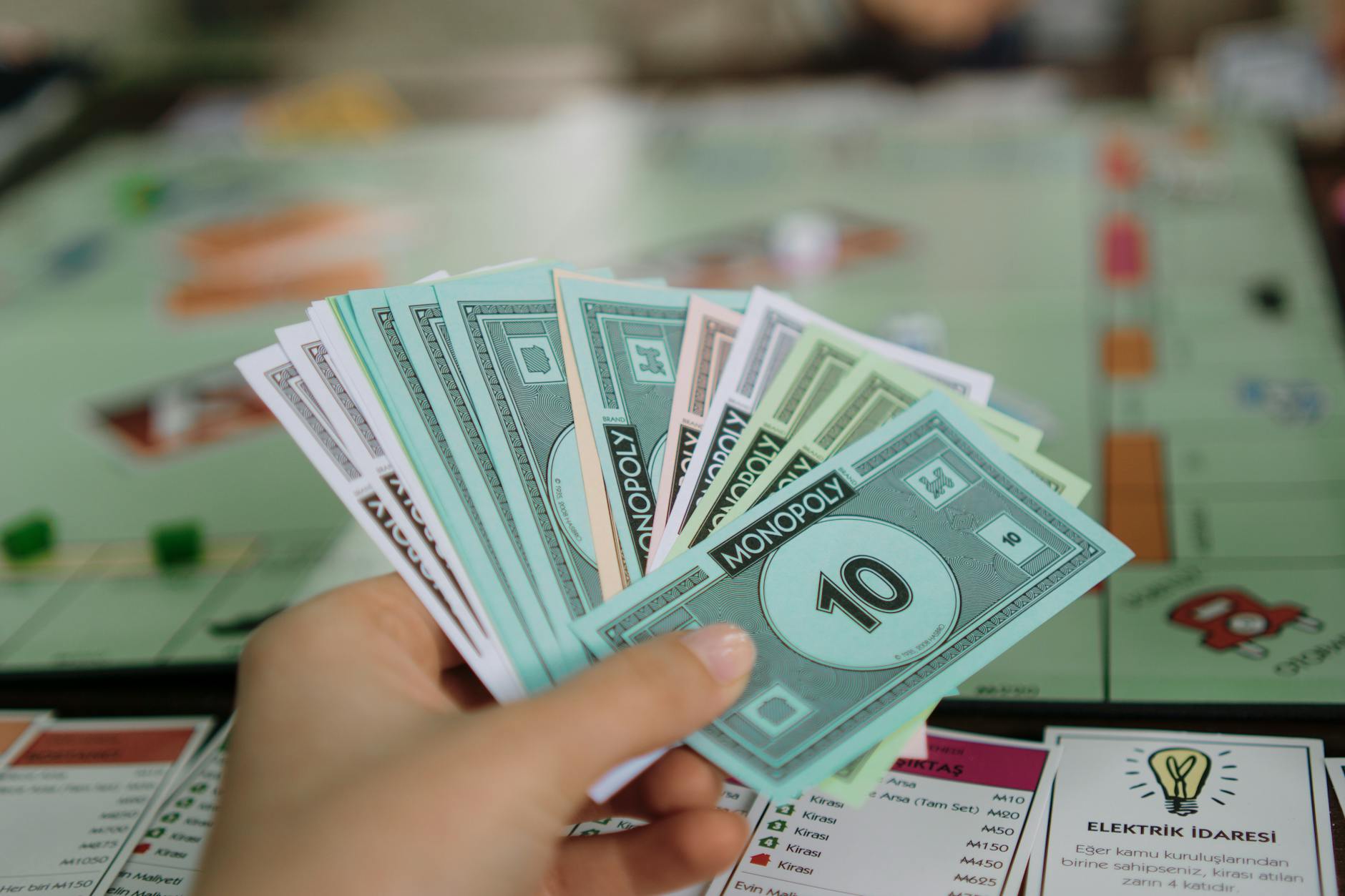
14. In Monopoly, which property is landed on most often?
This question generates more debate than almost anything else I ask. Everyone has a theory. Everyone is wrong in a slightly different way.
Show Answer
Illinois Avenue. It’s a combination of its board position and the probability math involving the “Go to Jail” space. People almost always guess Boardwalk because it’s the most memorable, not the most visited.
15. True or false: The game of Life was originally created in the 1960s.
This is a trap and I’m not sorry about it.
Show Answer
False. The original version, called “The Checkered Game of Life,” was created by Milton Bradley in 1860. The modern spinning-wheel version came out in 1960 as a 100th anniversary edition. That’s a century of telling kids that life is a series of random outcomes, which is honestly pretty accurate.
16. In the game Simon, what are the four colors?
Four colors. You’d think this would be automatic. Watch how long people pause on the fourth one.
Show Answer
Red, blue, green, and yellow. The one people forget is almost always yellow. I don’t know why. Yellow gets no respect in memory games.
17. What kids’ game involves removing wooden blocks from a tower without letting it fall?
Another gimme, but I include it because of the argument it starts. Ask any table whether Jenga is a kids’ game or an adults’ game and you’ll lose ten minutes.
Show Answer
Jenga. The name comes from a Swahili word meaning “to build.” It was created by Leslie Scott based on a game her family played with wooden blocks in Ghana in the 1970s.
18. In Rock, Paper, Scissors, which option beats which? Specifically: what does paper beat?
Nobody gets this wrong. But ask someone to explain WHY paper beats rock and you’ll get the most creative nonsense you’ve ever heard. I’ve heard “paper smothers rock,” “paper wraps rock,” and once, memorably, “paper files a restraining order against rock.”
Show Answer
Paper beats rock. The traditional explanation is that paper covers rock. The game likely originated in China during the Han dynasty, though the original version used different hand signs.
19. What’s the maximum number of players in a standard game of Sorry!?
People who’ve played Sorry! a hundred times still second-guess this one. They know the board has four colors, but the brain wants to add a fifth.
Show Answer
Four players. One for each color: red, blue, yellow, and green. Sorry! is based on the ancient Indian game Pachisi, which also accommodates four players.
20. In the card game Go Fish, how many cards does each player start with if there are two players?
This is a rule that every family has played differently, which means half the room is about to learn they’ve been wrong for decades.
Show Answer
Seven cards each. With three or more players, it drops to five cards each. The number of families playing with five cards regardless is staggering, and I say this as someone who did it wrong until I was thirty.
The deep cuts
21. What country invented the game of tag?
Trick premise. Nobody invented tag. But the question makes people commit to an answer before they realize the trap.
Show Answer
No single country can claim it. Variations of tag have been documented in ancient Egypt, ancient Greece, and medieval Europe independently. It seems to be something kids everywhere just figure out on their own.
22. In Pokémon games, what are the three starter types that players typically choose from?
Kids demolish this question. Adults who played the original games get nostalgic. Adults who didn’t play look lost.
Show Answer
Fire, Water, and Grass. This has been consistent across every mainline Pokémon game since 1996. The rock-paper-scissors dynamic between these three types is the foundation of the entire franchise.
23. How many squares are on a standard checkerboard?
People say 64 immediately and feel great about it. Then I ask how many of those squares are actually used in the game.
Show Answer
64 total squares (8×8), but only 32 dark squares are used for play. The other 32 just sit there looking decorative. It’s the most underemployed real estate in gaming.
24. What’s the name of the ball-and-cup toy that’s been around for hundreds of years?
This one’s a vocabulary test disguised as a trivia question. Most people can picture it instantly but can’t name it.
Show Answer
Bilboquet (or kendama in Japanese). The French version dates to the 16th century. It was a court game before it was a kids’ toy, which means somewhere there’s a painting of a duke playing with a ball and cup.
25. In the game Battleship, what’s the smallest ship and how many spaces does it occupy?
People remember the big ships. The little ones fade. That’s true of real navies and plastic ones.
Show Answer
The Patrol Boat (or Destroyer in some versions), occupying 2 spaces. People often say the Submarine at 3 spaces because they forget the two-peg ship exists. It’s the first one sunk and the first one forgotten.
26. What game has players slap a hand-shaped device to buzz in and answer questions about categories?
If you grew up in the late ’90s or 2000s, this sound just played in your head.
Show Answer
Bop It. Though Bop It is more of a reflex game than a category game. If you were thinking of Taboo’s buzzer, that’s a different satisfying slap. The question is slightly misleading on purpose because both answers make people feel something.
27. In the game of jacks, what do you bounce before picking up the jacks?
A game that’s genuinely disappearing from playgrounds. Kids under ten rarely know it. Adults over thirty can still feel the points of those metal jacks digging into their palms.
Show Answer
A small rubber ball. You bounce it once, grab the jacks, and catch the ball before it bounces again. The game dates back to ancient Greece, where they used knucklebones instead of metal jacks.
28. What does the acronym LEGO stand for?
I’ve asked this at probably fifty events. The success rate is shockingly low for something printed on billions of bricks.
Show Answer
It comes from the Danish words “leg godt,” meaning “play well.” The company later discovered that “lego” also means “I put together” in Latin, which is either a coincidence or the universe being on brand.
The ones where kids beat adults
29. In Roblox, what is the in-game currency called?
Every kid under twelve knows this. Most adults over thirty have never heard the word. This is the generational divide in one question.
Show Answer
Robux. It replaced an earlier currency called Tix (Tickets) in 2016. The economics of Robux are genuinely complex, and some kids understand virtual marketplaces better than their parents understand real ones.
30. In Among Us, what are the small tasks that crewmates complete around the map called?
This game owned 2020 in a way that nothing else did. Kids played it. Adults played it. Streamers played it. The vocabulary became universal for about eighteen months.
Show Answer
Tasks (specifically categorized as short tasks, long tasks, and common tasks). The real answer everyone’s looking for is “tasks,” but the specific mechanic people remember is the emergency meeting button. “Sus” entered the vocabulary of an entire generation from this game.
31. What animal is the main character in the mobile game Crossy Road?
It’s a joke. The whole game is a joke. And the answer is the punchline to one of the oldest jokes in English.
Show Answer
A chicken. The entire game is built around the joke “Why did the chicken cross the road?” The developers named it Crossy Road and made the default character a chicken and somehow it still took people a while to get it.
32. In Fortnite, what’s the name of the storm that shrinks the play area?
Adults who don’t play Fortnite still somehow know about the dances. They never know about the storm.
Show Answer
The Storm. Just “the Storm.” No fancy name. It closes in on the map to force players together. The simplicity of the name is part of what makes it effective as a game mechanic and as a trivia answer that makes people feel like they overthought it.
Nostalgia with teeth
33. What color is the drop zone in the game Perfection?
If you played Perfection, your heart rate just went up. That timer sound lives in a part of the brain that never lets go.
Show Answer
Yellow. The tray that pops up and sends pieces flying is yellow. But nobody remembers the color. They remember the sound and the flinch. Perfection is less a game and more a stress test marketed to children.
34. In the game Mouse Trap, what’s the final step that actually catches the mouse?
Nobody ever finished building the trap by the rules. Not once. Every family just built the whole thing first and then triggered it repeatedly. But the actual final step is specific.
Show Answer
A cage (or basket) drops down onto the mouse. The Rube Goldberg contraption ends with a ball rolling down a chute that triggers the cage to fall. In theory. In practice, the thing jammed every single time and you pushed the cage down yourself.
35. What year was the Nintendo Game Boy first released?
This one hits different depending on your age. For some people it’s a math problem. For others it’s a memory they can feel in their hands.
Show Answer
1989. It came with Tetris, which is arguably the reason it succeeded. The Game Boy had worse graphics than its competitors but better battery life, which turned out to matter way more on road trips.
36. In the game of Sardines, how does it differ from regular Hide and Seek?
Sardines is one of those games that every kid knows and no adult remembers the name of. When you describe it, everyone lights up.
Show Answer
One person hides and everyone else seeks. When a seeker finds the hider, they squeeze into the hiding spot with them. The last person to find the group becomes the next hider. It’s Hide and Seek inverted, and it’s objectively funnier because eventually eight kids are crammed behind a couch trying not to laugh.
37. What’s the highest-selling board game of all time?
People always guess Monopoly. They’re not wrong, but the numbers are staggering enough to make the answer feel like new information even when you predicted it.
Show Answer
Chess, if you count it. Monopoly if you’re talking about branded, boxed board games. Monopoly has sold over 275 million copies worldwide. But chess sets outnumber everything, and chess predates the concept of “selling” a game by about a thousand years.
38. In the game Red Light, Green Light, what happens if the caller sees you moving during Red Light?
This game became globally famous again in 2021 for a very specific reason. The stakes in the Netflix version were slightly higher than the playground version.
Show Answer
You go back to the starting line. In the schoolyard version, at least. Squid Game turned this game into a cultural moment in 2021, introducing it to millions of people who’d never played it and terrifying millions who had.
39. How many dots are on a standard six-sided die?
People start adding in their heads and you can see the exact moment they realize they’ve never done this before. It’s basic arithmetic dressed up as trivia, and it works every time.
Show Answer
21 dots (1+2+3+4+5+6). Opposite sides of a standard die always add up to 7. That’s not a coincidence. It’s been the standard since ancient Rome.
The last one standing
40. In the original rules of Musical Chairs, what are you supposed to do with the removed chair?
I save this for last because nobody expects Musical Chairs to be the hardest question of the night. Everyone knows the game. Remove a chair each round, music stops, someone’s out. But the question of what happens to the chair itself is something almost no one has considered. It’s the kind of question that makes people realize how much of childhood they experienced without ever actually examining. The games we played shaped how we learned to win, to lose, to wait our turn, to be loud, to be sneaky. And we remember every one of them slightly wrong, which is what makes trivia games for kids so much richer than they seem. The chair doesn’t vanish. Somebody has to put it somewhere. And that somebody was usually the kid who just got eliminated, carrying their own defeat to the side of the room. That’s a game teaching you something, whether it meant to or not.
Show Answer
There’s no universal “official” rule about the removed chair. In most versions, it’s simply set aside. But in the original parlor game versions from the mid-1800s, the eliminated player was meant to take their chair and sit in it on the sidelines, watching. You carried your own chair out. The game literally made you pick up the thing you lost and sit in it while everyone else kept playing.
Family quiz nights are where I started, 14 years ago in Barcelona, Spain, writing questions for school fundraisers that parents and kids could actually do together. The trick is never talking down to the kids or boring the grown-ups. My rounds have been used by Quiz Night King, and I take the same care with every set I write.
Latest posts by Christophe Fischer, B.Ed. Primary Education
(see all)